If you had to guess, how many digital ads do most people see every day?
It’s probably a lot more than you think.
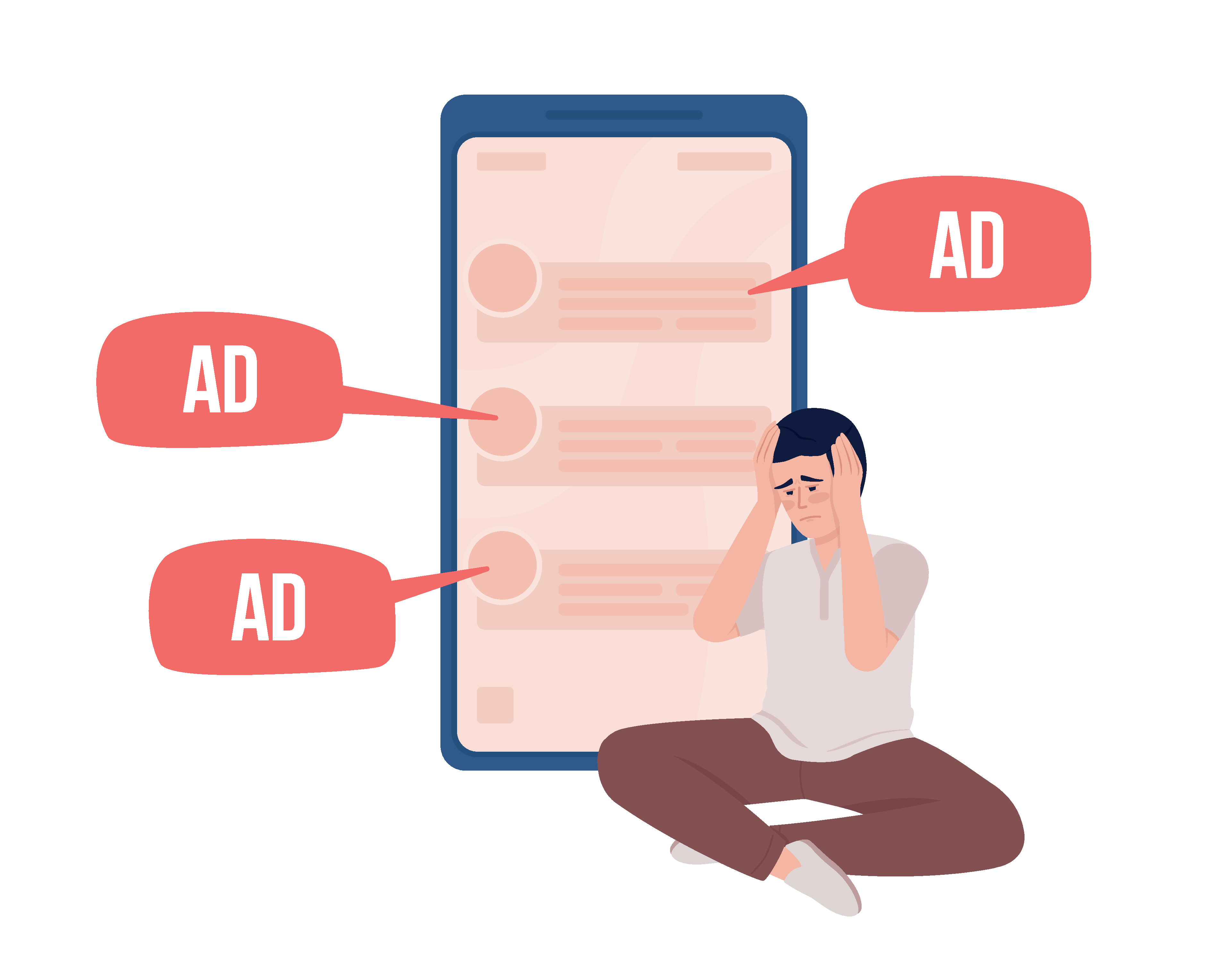
According to Forbes, an internet user sees up to 10,000 online ads per day. Yep, 10K. Most people are bombarded with digital advertising like banner ads, PPC ads, display ads, feed ads, and more.
If everybody had to comprehend all of these ads, we’d have no time left to get anything else done. It’s easy to see why most people automatically tune out a lot of this digital noise. Or they use adblockers to avoid the commotion completely.
This introduces a challenge for digital advertisers: how do we make ads that people don’t scroll away from? Ads that have an impact. Ads that are interesting, informative, and fun to read. Ads that offer something more than a sales pitch.
Here at Paved, we believe native email ads are the solution. We help brands partner with newsletter publishers to craft impactful sponsored content.
Let’s explore native email ads and some helpful tips for writing them.
What’s a native email ad?
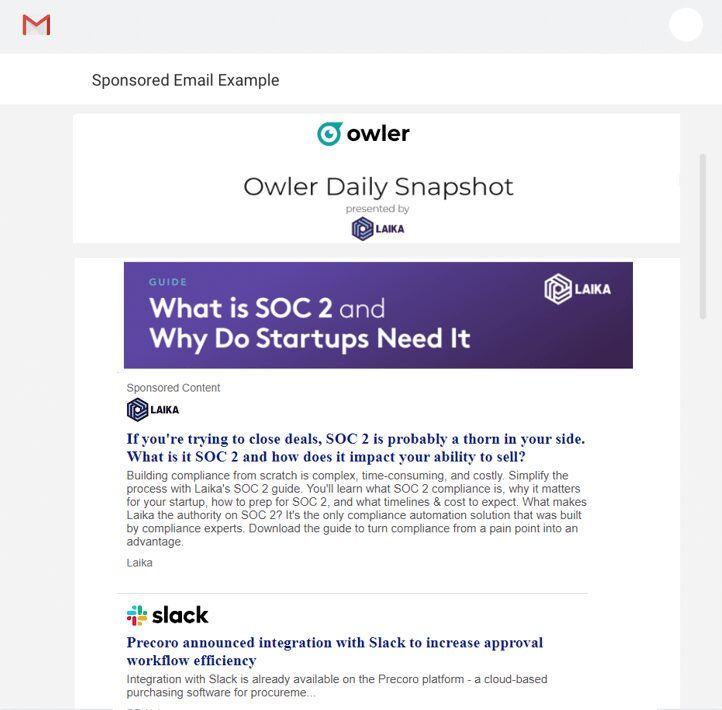
As the name suggests, a native email ad blends in with the appearance and layout of a surrounding newsletter.
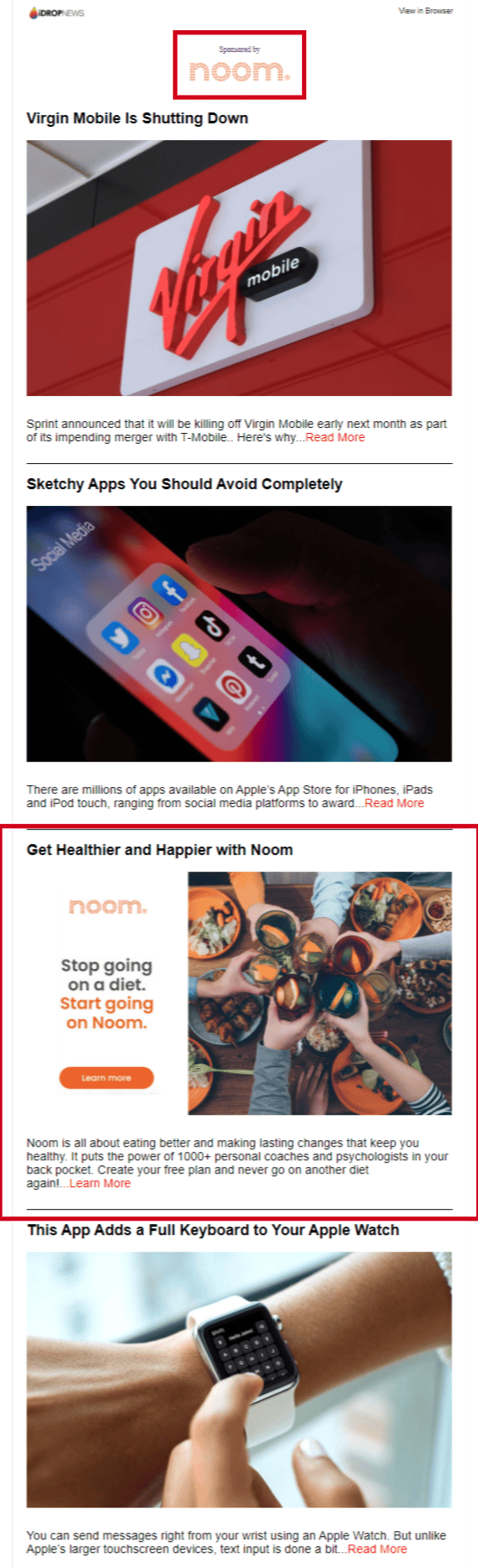
Native ads match the look and feel of their surroundings so they don't feel out of place. Most people prefer native advertising because it lets them view content without any interruption, often offering some value to the audience.
In content marketing, native email ads offer a few key benefits:
- •They look like a part of a regular newsletter (and they include a small tag to show that it’s sponsored content).
- •They’re immune to pop-up blockers and ad-blocking software.
- •They have a built-in audience of engaged people who are interested in your brand.
- •They’re known to lift purchase intent and click-through rates.
- •They can improve brand awareness and conversion rates.
- •They fully comply with online privacy laws like GDPR.
You’ve probably seen a few of these ads in your own inbox. When they’re done right, native email sponsorships can drive traffic to your landing pages and boost conversions for your brand.
Native email ads: 8 copywriting tips for sponsorships
Creating a native ad campaign for email has a few steps:
- First, you’ve got to find the right newsletter to advertise in. Or, you can book a programmatic campaign in multiple newsletters with an Ad Network.
- Next, you’ll need to choose your ad format, creative, and design layout.
- Finally, it’s time to write and optimize your ad copy.
The third step is one of the most important. Without compelling ad copy, your audience is bound to scroll on to something else.
To craft email ads that your audience will love, check out our 8 copywriting tips:
1: Choose your target audience wisely, and get to know them
Unlike other traditional advertising, native email sponsorships give advertisers access to a group of engaged people with proven interests. Since the emails they subscribe to are interest-focused, your ads should be, too.
Your sponsorship should focus on exactly what the newsletter readers are most interested in. As you draft your ad’s copy, center it on what you know about your potential customer. Think about their interests, the kind of content they prefer, and what sort of problems you can help them overcome.
You should know your audience and tailor your message accordingly. When speaking to a group of developers, for instance, you'll communicate differently than when dealing with a group of health and wellness experts. Developers likely want in-depth technical breakdowns, while wellness gurus might appreciate a quick promo on the latest nutrition supplement.
2: Write with style
Next, you should think about the style of your ad’s copy. The best fit depends on your audience and the surroundings of your sponsorship. You’ll want it to blend in with the rest of the newsletter. Aim for a writing style that’s credible, informative, and engaging for readers.
Here are a few style frameworks that we find helpful.
- •Advertorial:
This ad format adopts the framework of magazine-style editorial content to sell something or promote a service. - •Case study:
This ad type shares real-world research on a product or service. - •Story:
This format uses storytelling to share something interesting with readers. - •Expert Interview:
This ad type shares industry-specific expertise with your audience. - •Product Test or Review
This type of ad focuses on the performance of a product or service. - •Classifieds
Much like the classifieds section of a newspaper, this type of ad is a quick text-based blurb about the benefits of your product or service.
Whatever format you choose, make sure your ad copy is customized for each newsletter you advertise in.
3: Make a personal connection
Readers can spot poorly written paid ads in a fraction of a second, and they’re not afraid to scroll past them. That’s why it’s important to make a genuine connection with your audience. You should offer insights, add value, and tell compelling stories to engage with the audience.
The best email ads match the theme and branded content of the newsletter they’re in. One great way to connect with your audience is to match the brand voice of the newsletter you’re sponsoring. Some advertisers collaborate with their publication partners to ensure the newsletters and ads have the same voice.
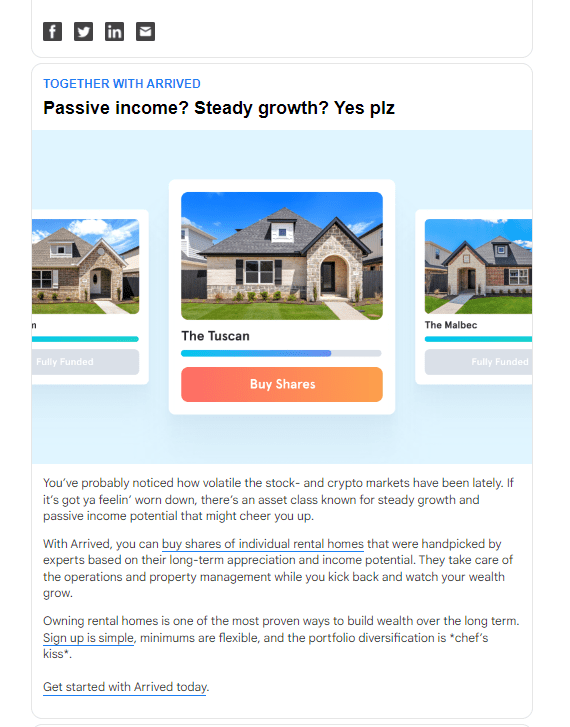
Need inspiration? Check out this issue of the Morning Brew newsletter. Their sponsor, Arrived, did an amazing job of matching the newsletter’s sharp wit and informal tone. The result is an intriguing and fun-to-read email advertisement:
4: Experiment with AI Suggestions
Machine learning is getting smarter than ever. If you don't have time to write a lot of copy variations or hire a copywriter, try a tool like Paved's AI Creative Assistant.
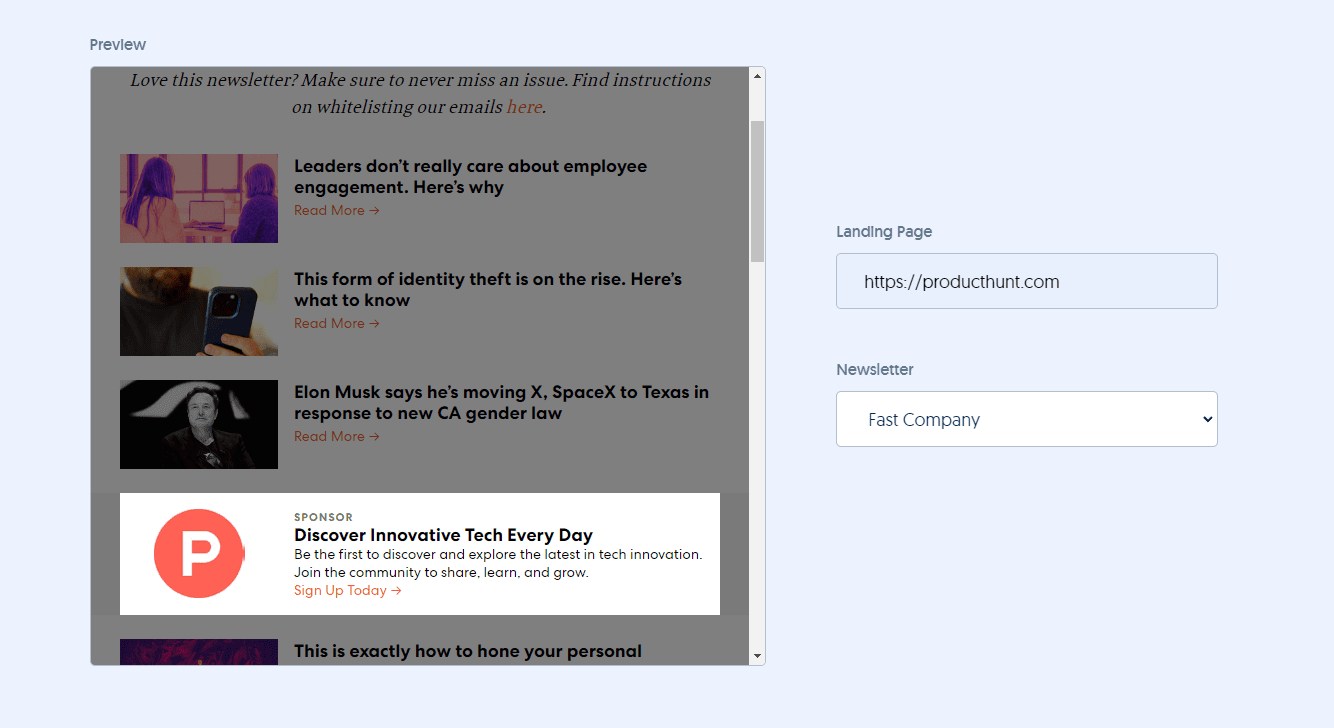
This tool scans a database of thousands of top sponsorships to generate the copy that's most likely to engage a specific newsletter's audience.
All you have to do is enter the landing page you want to promote, and the AI helps you get the creative juices flowing:
5: Avoid spam filter trigger words
After you write phenomenal ad copy for your sponsorship, the last thing you want to do is have the newsletter end up in the spam folder. Most email providers like Gmail, Outlook and more have built-in filters that flag specific words and phrases for spam and junk folders.
Some spam filter trigger words are pretty obvious—think of boastful marketing-speak like “make money” and “act now.” But other trigger words like “quote” and “trial” might surprise you. Just to be safe, you should familiarize yourself with this spam filter trigger list from Active Campaign.
6. Shorten your word count
With limited space in an email template, advertisers must make an impact quickly. For this reason, it’s best to keep things brief.
Researchers say that you should trim your drafts by about 50% for online writing. Why? Because concise copy boosts your credibility and improves trust in your brand.
How wordy is too wordy? Thanks to the internet, there’s an easy way to write more concisely. Run your ad’s draft through the Hemingway App, which analyzes text for brevity and readability. Aim for a score of 9 or lower to keep your ad campaigns short and sweet.
7. Write a compelling CTA
Near the end of your copy, always include a call to action or CTA. A CTA helps your readers act upon the solution you suggested in your sponsorship.
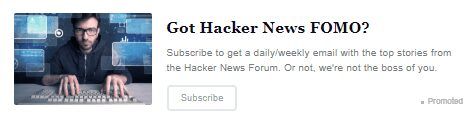
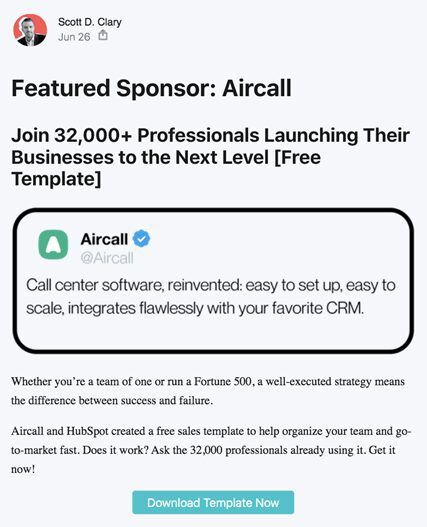
Don’t be afraid to add a little bit of FOMO (fear of missing out) here. Let the reader know what they’ll miss if they don’t click your offer.
For example, check out this sponsorship from Aircall that ran in a popular newsletter for entrepreneurs. The CTA is simple but effective:
8: Write for skimmers, not readers
When people are sipping coffee and scrolling through their favorite digital newsletter, one thing is for sure. Nobody wants to read a boring block of uninterrupted text.
Believe it or not, the science backs this up. A study from Nielsen showed that people don’t typically read digital content from start to finish.
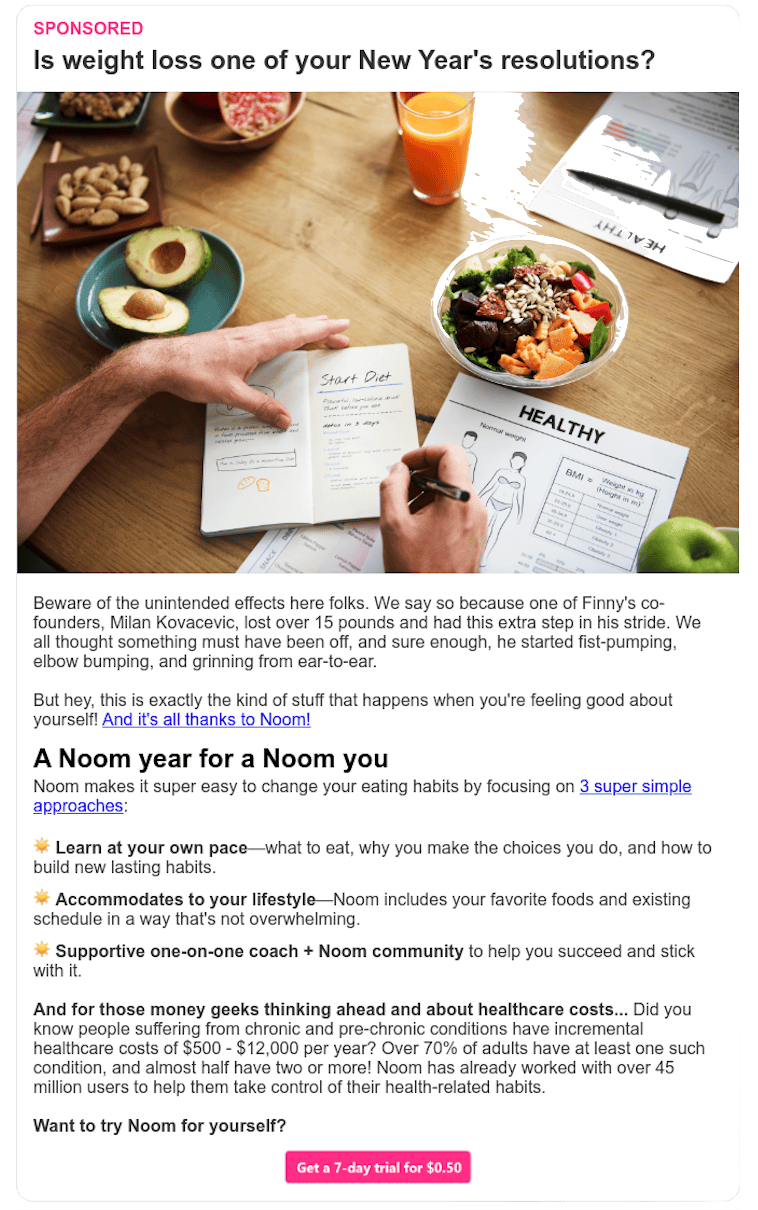
Instead, most online readers (that's 79% of us) skim the content in an F or a Z pattern. That’s why you should write for people who are scanning—not reading—your content.
Here are our favorite tips for easy scannability:
- •Create informative ad headlines.
- •Use headers and sub-headers to divide your text into chunks.
- •Keep sentences short and varied.
- •Limit paragraphs to 3 or fewer sentences.
- •Use bullet points or lists to break up long sections.
We think Noom did a fantastic job organizing their long-form ad in this winning sponsorship from a recent newsletter:
9: Review the finished product
To avoid embarrassing mistakes, grammar errors, or typos, it’s crucial to have another person on your team review your ad before you submit it. A polished final product will increase your credibility and help earn your audience’s trust.
If you can’t find a proofreader, that’s OK. Just run your copy through an AI grammar checker like Grammarly. Then—for a final quality check—read it out loud. It’s the most effective way to catch easy-to-miss errors like typos and missing punctuation.
Pro tip: try adding a free voice reader to your web browser. It makes it easier to get into the habit of listening to your words out loud for DIY proofreading.
Run easy native email ads with Paved
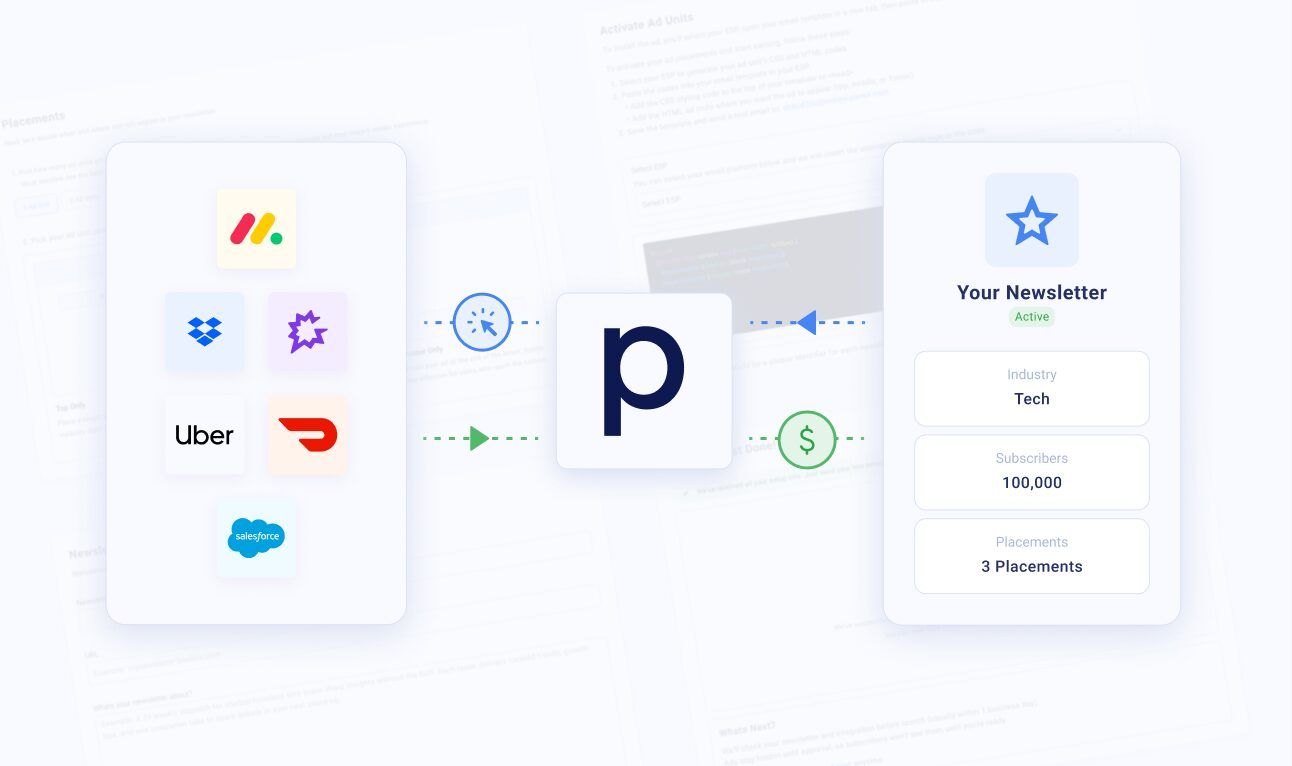
Now that you know the secrets of writing native email ads, put your new skills to the test with Paved.
The Paved Marketplace simplifies the newsletter advertising process by connecting sponsors with premium publishers. We make it easy for advertisers to find great sponsorship opportunities and design impressive ads.