Email marketing serves a wide range of purposes. From highlighting new features and products to letting your customers know a sale is coming, there’s a huge variety of uses for emails. They’re also hugely important for customer engagement - unsurprising when you consider that the typical consumer spends up to five hours per day checking their emails!
So, you may be wondering: why are newsletters such an important part of email marketing?
Newsletters are an excellent way to increase engagement on a limited budget. They’re an easy way to help customers to stay up to date and provide regular, interesting updates for your target audience.
With that in mind, let’s take a look at six newsletter ideas that can help boost customer engagement.
1. Curate your content thoughtfully
Your first objective should always be to curate high-quality content. As a curator, you act as a bridge between the content you publish in your newsletter and your readership. This is critical for developing a long-lasting relationship with your target audience. The higher the quality of your material, the more engagement it will receive.
Think about what you want your newsletter to be. Will it keep your consumers up to date on the newest products? Talk about trending news relevant to your industry? Share what other customers have been up to, perhaps?
The crucial thing is that the information you're transmitting has some genuine value to your readers, otherwise you'll end up annoying them. You can monitor this through your customer satisfaction (CSAT) rating. Remember, you can always have more than one newsletter, allowing people to sign up for what best suits their interests.
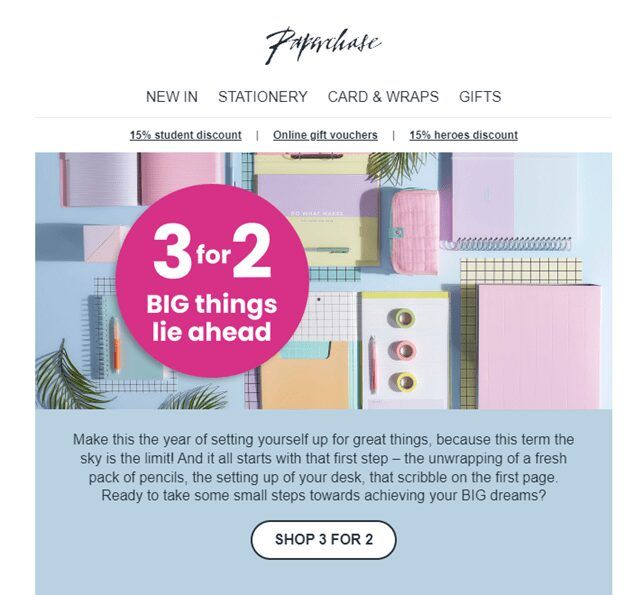
2. Ensure your newsletter is easily accessible
Don't forget to take care of your technical housekeeping. Implementing a good user experience will leave subscribers with a positive image of your company.
Newsletters should open properly on all devices. If your newsletter is not mobile-friendly in this day and age, you are neglecting a huge portion of your audience. You also need to allow readers to unsubscribe easily, since forcing readers to hunt around for the right link to click is guaranteed to frustrate them.
It is also important to keep an eye on the quality of your current email list. To start, integrate an email verification tool to check that the email address you've submitted is authentic and capable of receiving messages. It’s also worth adding a double opt-in mechanism to safeguard yourself against bots while also ensuring a more refined email list.
Meanwhile, if the newsletter is delivered to your subscribers but not read, it's likely not an issue with the email addresses. Rather, it’s a sign that it’s time to make some adjustments to your email newsletter design.
3. Promote your newsletter on other channels
Believe it or not, it's important to spend an equal amount of effort on generating and promoting your content. Here are some of the best ways channels for promoting newsletters and capturing engaged leads:
- •Social Media
If people are following you on social media, they’re obviously interested in your brand. Let them know about your newsletter - after all, when someone subscribes, updates will go immediately to their inbox instead of being one of many posts in their feed. Just make sure your newsletter content is distinct and more in-depth than what you share on social media to give users an incentive to sign up.
Social media sign-up forms are an impactful way of generating more subscribers and promoting newsletters. Making use of these sign-up forms on social media stories and posts can create a call to action from your followers and boost customer engagement in your newsletters.
- •SMS
SMS alerts can increase email open rates by alerting recipients when your newsletter is sent out. While most customers only check their emails a few times in a given day, almost all will have their phones on them throughout the day. This will create greater awareness and ideally generate more clicks.
Making use of short-form SMS newsletters can be a helpful tool in sharing important information (sales, breaking news, new enhancements, or services) and can uphold interest before the next newsletter is sent out.
- •Website
Your website is one of the most important points of interaction with potential customers. Don't lose out on generating new email marketing opt-ins at this significant interaction point with your intended audience.
Ensure your newsletter is accessible through a menu link on your website. A link in the menu has been a traditional way to subscribe to the newsletter, so interested users will search for it here. Another common location is via a checkbox in the order process, so give buyers the chance to sign up before they complete their purchase.
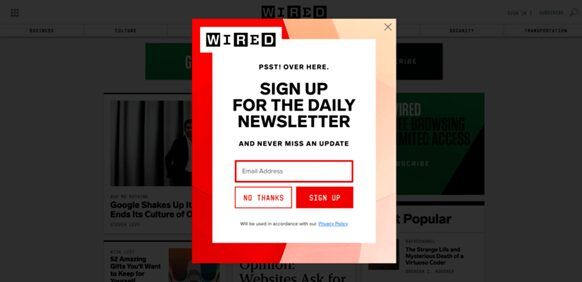
The implementation of email popups can improve the number of website visitors converting to email subscribers. Make sure to spend time designing an engaging pop-up that complements, rather than distracts, from the content.
4. Diversify your newsletter content
There is a certain level of consistency required to maintain your brand voice, however, it is vital to diversify the content being shared with your audience to uphold engagement and generate interest. Remember, it’s not just text content you can share - consider incorporating rich media into your newsletter every so often.
Whether that is through website updates, social media posts, or using Pixartprinting to make magazines, flyers, or leaflets, you should captivate your audience with varied newsletters so that you can send them out more regularly without boring the reader.
Here are some ideas we recommend:
- •Video Content
Make use of video content to grow and market your product. If you're committed to producing high-quality material, you'll undoubtedly create an interesting twist on the conventional newsletter with video content to captivate the receiver. This is particularly useful if you want to show off a tutorial, or simply have something that can’t quite be captured with images.
- •Interactive Content
Interactive content encourages users to communicate with one another, discuss socially, and provide your business with information that aids in lead targeting. This type of content offers entertaining, high-quality, shareable, and distinct material. For example, consider adding interactive infographics, virtual scratch cards, or digital puzzles to your next email.
- •Infographics
This works well for industries or businesses looking to engage their customers with data but in a more visually interesting way. One main advantage of infographics is that people often want to share them - meaning your readers will spread your message for you.
- •Usable Content
Consider adding things your audience can directly use. For instance, if you’re writing about working with affiliate marketers and influencers, you could include a link to an affiliate marketing template. If you’re a craft supplier, why not add a free cross stitch pattern? By including things that aren’t just interesting to read, but also practical, you can increase engagement as people will start to look forward to what you give them next!
- •Extended Reads
Longform content is highly informative, so it allows your brand to stand out. Use your newsletter to highlight a sample of your extended reads and insert a link to the rest of the content.
By leading the reader to the rest of the blog, you provide them with a ton of extra content and can build a positive image of your brand. Just make sure to keep your target market in mind at all times. If your target audience is software developers, they're likely to navigate through to an article on QA testing examples but are unlikely to engage with an article on C-Suite finances.
5. Experiment with user-generated content (UGC)
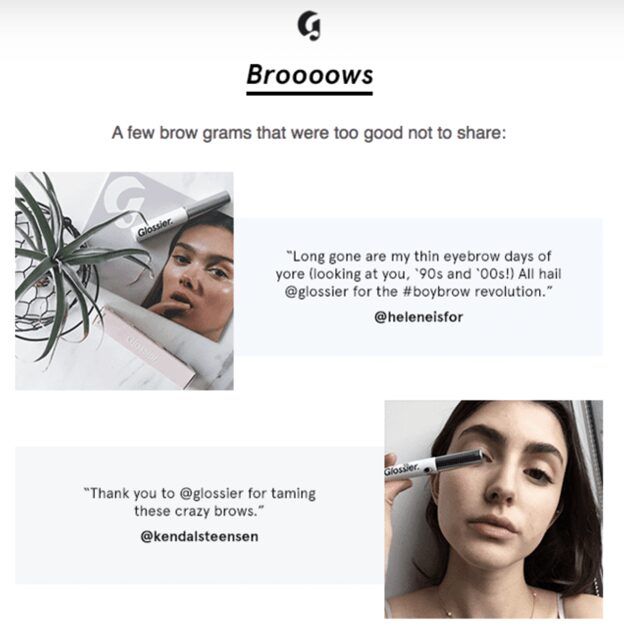
User-generated content is extremely effective. It is not only fun for your subscribers, but it is also highly valuable as your consumers are the experts on what they like and dislike.
Including UGC in newsletters naturally increases customers’ motivation to read your emails and be more responsive to surveys/reviews as there is the chance they will be featured in the future. Even customers love a bit of the limelight!
When you include user-generated material, it demonstrates that people are willing to participate with your brand. Which gives you credibility and in turn, people will have more faith in your brand. Customer experiences, images, videos, and ideas are all examples of user-generated content.
6. Create "best of the month" digests
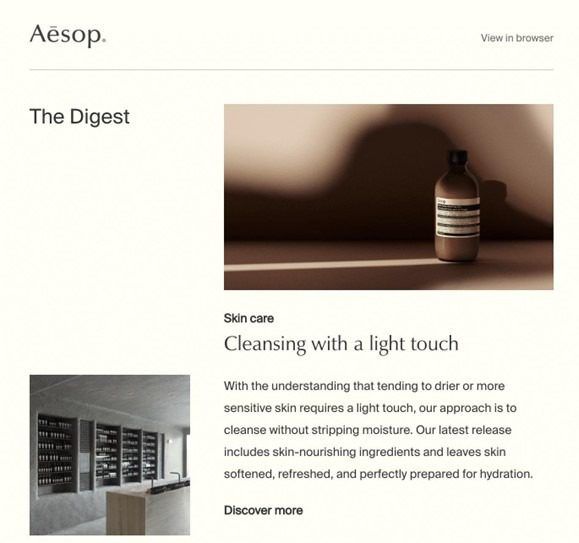
By rounding up the best content of the month, you can keep your subscribers up-to-date on what you consider most important. This can be in the form of top-selling products, new services, and features or the best content of the month.
It’s also a great option for people who don’t like their inbox filling up - saying they’ll only get one email a month is a great way to encourage them to sign up!
A round-up of blog posts gives the subscriber a sample of what you have to offer and you not only get to share relevant material with them, but they also get to enjoy a selected compilation of entries from your website.
A carefully curated blog roundup should:
- •Continually provide relevant material to core customers.
- •Create community and relationships.
- •Include sharing buttons so customers can share things for you.
The Takeaway
The six approaches above are sure to keep your newsletters interesting and fresh, leading to enhanced client engagement and consumer loyalty.
If a subscriber joins your list to get these updates, it is likely that they are already interested in your brand. However, don’t take this for granted. Maintain a steady flow of relevant and interesting content to keep your customer engaged.
The more value you supply your audience, the more likely they are to engage with your emails. The more engagement you receive from your newsletters, the greater the ROI.
This guest post was written by Jenna Bunnell, Dialpad's Senior Manager for Content Marketing. Dialpad is an AI-incorporated cloud-hosted unified communications system for business owners and sales reps.