Remember when Open AI launched ChatGPT in late 2022? Many professionals, including marketers, predicted it would revolutionize the industry and eliminate jobs.
It's been almost two years, and marketers are still relevant. ChatGPT and other artificial intelligence (AI) tools are impressive, but they still require human creativity and intuition to produce top-notch results.
One thing is certain: AI has revolutionized the industry, especially in areas like native advertising, which requires a seamless blend of promotions with organic content.
In this article, we'll explore how AI helps advertisers create effective native ads that resonate with their audience. By the end, you'll understand how this technology can enhance the performance of your future campaigns.
What is AI in native advertising?
AI (artificial intelligence) in native advertising uses advanced algorithms and automation tools to create and optimize ads that seamlessly integrate with a platform’s content. This ensures the ads are less intrusive and more engaging, allowing marketers to focus on strategic planning and efficiency.
Marketers already use tools like email marketing software, SEO platforms, social media marketing tools, and lead capture solutions to attract customers with relevant and engaging content. AI is an additional powerful tool in their arsenal, enhancing these inbound marketing strategies.
How AI Enhances Native Advertising
So, how can this technology help native advertisers create successful campaigns? Here are some key benefits:
1. Market research
Every campaign starts with market research. This eliminates any guesswork by helping you understand your target market and industry. A traditional approach would involve gathering data from surveys, focus groups, your omnichannel contact center solution, and other sources. It is a rewarding yet time-consuming process. However, research time is reduced significantly with AI.
You can use a generative AI tool like ChatGPT to quickly find your target customer’s pain points. For instance, before launching your productivity app for entrepreneurs, you can ask ChatGPT about the pain points of small business owners in terms of productivity.
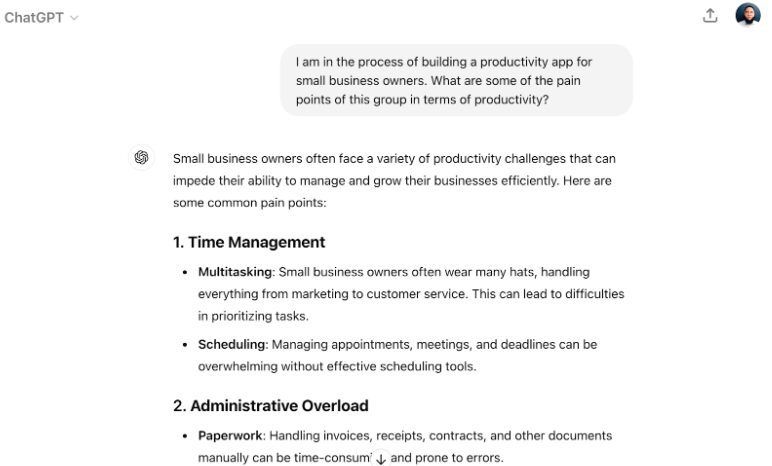
In the above image, the tool lists the productivity issues faced by small business owners. This gives you a sense of the problems your target audience encounters daily.
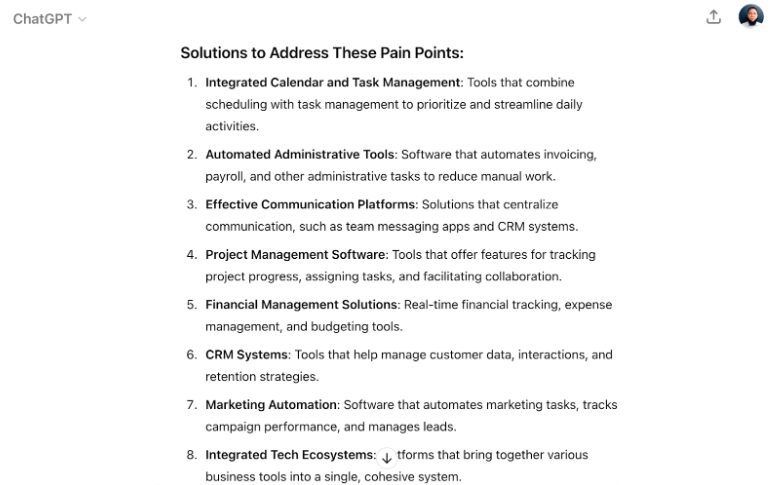
ChatGPT also offers solutions to these problems so you can tailor your app to address them. Now, you have to keep in mind that ChatGPT and some other AI platforms aren’t connected to the internet (although ChatGPT says its last knowledge update was in April 2023).
That means if your product is recent — like the iPhone 15, which launched in September 2023, ChatGPT will not help you. Granted, you can use web browser extensions to give it clunky internet access. However, it is not the same as having an AI tool with a real-time connection. You can turn to Google’s Gemini and Microsoft’s Copilot for more up-to-date results.
Artificial intelligence can help during data aggregation. Instead of searching manually, AI tools can collect and analyze large amounts of data from different sources. AI-powered visualization tools can then present it in easy-to-understand formats.
You can then leverage this data to identify customer behavior patterns, buying preferences, and other relevant information.
2. Audience segmentation
Segmenting your audience allows you to personalize your marketing efforts. It lets you create subsets of a market based on demographics, common interests, or other psychographic or behavioral criteria used to better understand your target audience. Thanks to machine learning (ML), an aspect of AI, this process can be more efficient and effective.
Machine learning analyzes large datasets and identifies patterns or trends humans may not immediately spot. We have access to so much information these days that it can be easy to miss important patterns. However, ML algorithms can process various types of data, such as users' online behaviors, the websites they visit, and the products they buy.
For instance, ML can discover the type of content that resonates best with a particular segment of your audience. With this information, you can then tailor your native ads to meet each group’s preference. In turn, you will get better engagement and, eventually, conversions.
Additionally, anonymous Instagram viewing tools can provide insights into user interactions without compromising privacy, further enhancing data collection for precise audience segmentation. Then, they use this information to create detailed customer profiles.
Artificial intelligence can also predict future behaviors based on past interests and actions. These systems can anticipate a person’s needs by analyzing their browsing history and online reviews. For example, if a customer has recently bought an iPad, the system might suggest accessories like a stylus pen or a protective case.
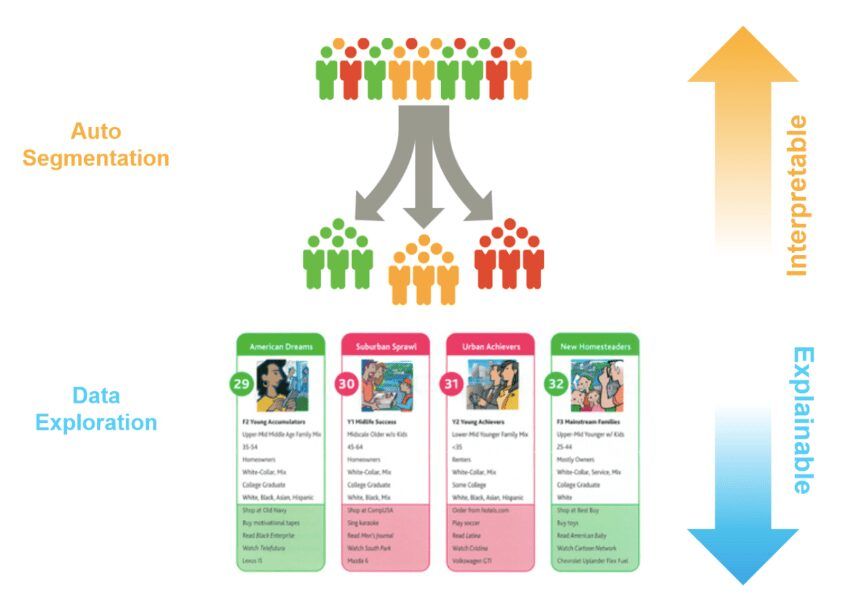
That way, businesses can reach their audiences with the right message at the right time.
3. Development of ad material and media planning
Apart from production challenges, the most difficult part about creating ads is authenticity. Until you actually design a few native ads, you can never really know how things such as camera angle, lighting, zoom, etc, impact the impression people will get after watching your ads.
Placing your campaigns on the right media platforms can be tricky if you lack enough information about audience behavior and preferences.
These are issues AI can solve. AI-powered tools can help you create ad materials or give you inspiration. They enable you to test ad materials so you can determine how each ad performs based on the goals of each campaign.
Artificial intelligence can also predict the best media for each ad and identify the ideal positioning on each media platform. This testing process shows you if the right ad is on the right media platform and in the proper format.
In turn, you communicate better with your target audience and improve campaign performance.
4. AI-assisted content generation
The nature of native advertising requires the ad to fit in naturally with the surrounding content. That means if you want to incorporate your ad in a blog post, you can’t slap a banner in the middle of the text. Your content must not look like ads so it doesn’t disrupt a user’s interaction with the page.
No wonder marketers turn to various content creation and management tools, such as copywriting and editing apps, SEO optimization tools, project management platforms, sales enablement software, and more. These tools are increasingly being powered by AI, which helps to make the ads more personalized and relevant.
For example, the best sales enablement software uses AI to analyze user data and past interactions to recommend the most relevant content for the sales team to use in specific customer situations.
Through natural language generation (NLG) models, AI can make ads that blend in seamlessly with the platform where they are displayed.
AI also offers sentiment analysis, which enables you to fine-tune native ads even further. The technology analyzes the current emotions of users to help you create ads that align with their moods. For example, if a user recently engaged with content about estate planning, AI can suggest native ads related to financial advising services or will preparation.
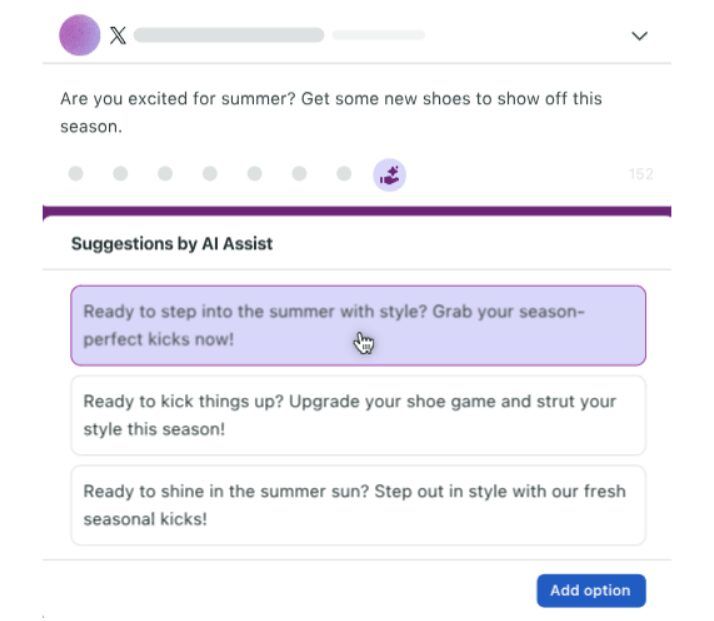
The possibilities of using AI for content creation are limitless. However, you must always be in control of the creative direction — that’s what smart marketers do.
5. Programmatic media buying
In the past, media buying involved a company representative manually negotiating prices and making the purchase directly from a salesperson. It was a time commitment and a bit of a process. Programmatic advertising, or AI-media buying, changed that by automating the process through real-time bidding. This allows you to buy ad space almost instantly — across millions of websites.
Artificial intelligence can quickly analyze vast amounts of data and make buying decisions in real-time. This enables advertisers to reach their target audience more effectively than ever before. They can customize their campaigns based on various factors, including audience demographics, behavior, and more.
These criteria are then used to place bids for ads across various advertising networks. The highest bid will win the impression, ensuring ads are displayed to the most relevant users at the right time.
6. Ad performance optimization
Successful advertisers know that you must continue to optimize your ads until you can’t improve them any further. Ad optimization allows you to detect and eliminate underperforming ads, saving you money in the long run. It can also help you improve your click-through rate (CTR), which is crucial for measuring your ad performance.
One way AI helps you accomplish this is by speeding up testing with AI-powered A/B testing. It allows you to test multiple ad elements, such as ad copy, visuals and calls to action. For instance, sales automation tools can automatically distribute two variations of a native ad to different segments of a prospect list. Then, track engagement metrics to identify the higher-performing version. As a result, you can make changes to your campaign in real-time.
Moreover, the integration of email tracking within AI-driven platforms can enhance the effectiveness of native advertising campaigns. By analyzing open rates, click-through rates, and engagement patterns, advertisers can gain deeper insights into user preferences and behavior, allowing for more precise and dynamic adjustments to their marketing strategies.
AI also ensures accurate conversion tracking via machine learning. ML evaluates many data points to understand how customers go from seeing to taking action, such as making a purchase or signing up for a newsletter. The algorithm identifies which ad interaction motivated a customer to act.
With this information, you can improve your current campaigns and plan future ones. Plus, when you recognize patterns in customer behavior that lead to sales, you can make your targeting more precise.
7. Data analysis
We have already discussed how AI streamlines the data analysis process. Today, native advertisers have access to a lot of data from various advertising and marketing platforms. This can provide huge amounts of valuable information about their audience. However, it can be challenging to analyze this data manually.
Several programs, like Excel and other data analysis tools, can help organize and interpret this data efficiently.
But imagine what you can achieve by combining AI with these tools.
AI not only crunches data more accurately than humans, but it can do it in an instant. The technology can analyze vast amounts of historical and real-time data from diverse sources to find trends, patterns, and anomalies quickly and efficiently. AI can also predict future trends and actions based on historical data using statistical models and forecasting techniques.
With AI, advertisers can quickly identify which strategies are working or not and make an educated guess about future campaigns. In turn, they can better allocate resources and improve their overall advertising ROI.
Benefits of AI in native advertising
When used correctly, AI can elevate your native advertising efforts in many ways, including:
- •Improving the user experience:
Native ads are less intrusive because they are presented as a natural part of the content. AI helps advertisers achieve this by analyzing the content of the webpage or app where the ad will be displayed. Then, it tailors the native ad to match the theme and style of the existing content naturally. - •Boost audience engagement:
AI ensures that a large portion of your target audience interacts with your ads by personalizing content. It does this by integrating with channels like websites, sales database software, and social media platforms. It then uses data like customer profiles and transaction histories to generate tailored ad content that speaks directly to individual users’ needs and interests. - •Increasing conversion rate:
Through machine learning, AI can process huge amounts of data to detect and target the audience segment most likely to be interested in the ad. This enhances the chances of conversion because you are delivering relevant ads to the right group at the right time. - •Maximizing ROI:
Predictive analytics, a sub-area of AI, can forecast how different native ads and content types will perform. This allows advertisers to optimize their strategy in advance, ensuring they get a higher return on their ad spend. - •Enhancing cross-channel marketing:
AI streamlines cross-channel marketing efforts by providing insights and optimizing ad performance across various platforms, ensuring a cohesive and effective marketing strategy. - •Maintaining brand credibility:
AI assesses the sentiments surrounding the ad placement to avoid negative or brand-damaging associations. That means your ads will only appear in a positive or neutral context, safeguarding brand integrity and reputation.
Challenges of AI in native advertising
The use of artificial intelligence in any professional context has its issues since it is relatively new and constantly evolving. Some of these concerns are:
- •Data privacy
To get the best out of machine learning models, you need access to data — lots of it. Now, this begs the question about the process of collecting and using that data. Advertisers need to be transparent about their procedures and ensure they are complying with data privacy regulations. - •Potential biases in algorithms
AI algorithms also have the potential to favor certain groups over others or unintentionally omit certain audience segments. This perpetuates inequality and can lead to unfair treatment of individuals based on their characteristics, such as race or gender. This happens when the data used to train the algorithm is biased. So, advertisers must regularly review and audit their algorithms to ensure fairness and make adjustments when they detect any biases.
The bottom line
Artificial intelligence has indeed revolutionized native advertising and will continue to shape its future. By analyzing user data, AI personalizes ads, optimizes their placement, and creates content that blends seamlessly with existing media, enhancing the overall user experience.
However, the true power of AI lies in how it complements the skills of talented marketers. When used ethically and responsibly, AI can enhance your marketing efforts, providing deeper insights and greater efficiency. It’s crucial for advertisers to prioritize data privacy and transparency to build trust with their audience.
Despite its capabilities, AI cannot replace the human touch. Authenticity and empathy are essential in creating native ads that genuinely resonate with your audience. By combining the analytical strength of AI with human creativity and intuition, marketers can craft campaigns that not only engage but also build meaningful connections with their target audience.