If finding your first paid newsletter sponsorship feels like an uphill battle, you're not alone.
Before you get too discouraged, here's what you should remember. In any given niche on the internet, hundreds, if not thousands, of advertisers are looking to promote their products.
All you’ve got to do is find them. Or better yet, help advertisers find you.
Recently, Emily from the Paved team interviewed 4 newsletter creators who shared their experience running a sponsorship for the first time.
Now, we're talking about what we learned from their stories, from finding the right advertiser for your audience to choosing the right prices.
What are newsletter sponsorships?
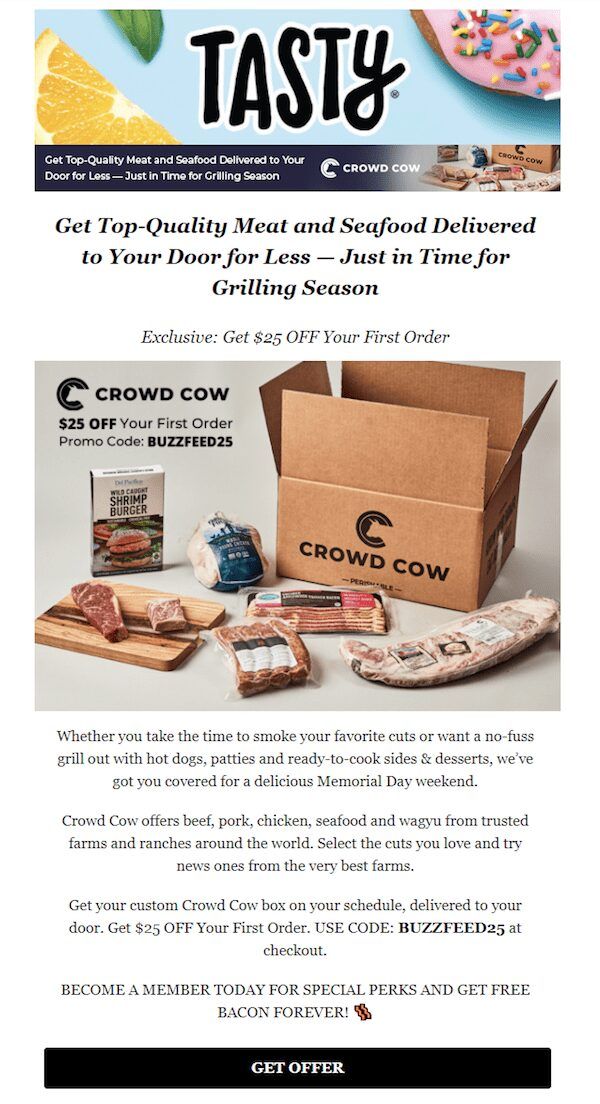
A newsletter sponsorship is a type of paid advertisement that appears within the body of an email newsletter.
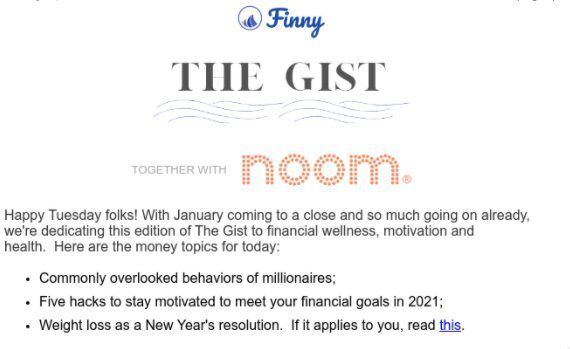
Unlike social media or search ads, this type of ad is typically integrated seamlessly into the reader’s experience. Some publishers will even tailor their regular newsletter content to better align with the sponsor’s message. Typically, sponsorship formats vary depending on the publication.
What does it really take to land newsletter sponsorships?
After you've built a healthy subscriber list, developed your community, and curated great content, you may be thinking about monetizing your newsletter through advertising.
Placing relevant ads in your newsletter is an excellent way to take your email list to the next level and make money from it. Now, let's examine the stories of 4 successful creators who did just that.
Meet the writers
Meet the newsletter makers featured in our My First Ad series:
- •Dylan Redekop of Growth Currency,
- •Ernie Smith from Tedium,
- •William Knight from Industry Slice,
- •and Branden Harvey from GoodGoodGood.
Their publications range in size from small (about 2K subscribers) to large (over 20K):
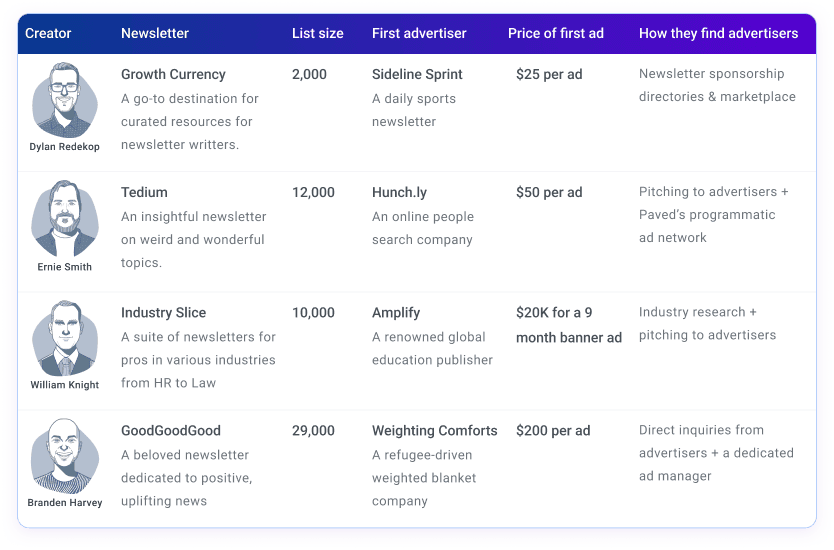
As you can see from the chart, you don’t need a massive subscriber count to start monetizing your newsletter. A small, high-quality community often attracts more sponsorship opportunities than a huge list with lukewarm leads.
5 key lessons from writers selling their first ads
So, what does it take to win newsletter sponsorship opportunities and close the deal?
All 4 of our interviewees agreed that creators should build a strong foundation of quality content, engaged subscribers, and a clear mission before selling ad space:
The best way to find sponsors is to focus on creating valuable content that resonates with your audience. Once you have a loyal following, you can start reaching out to potential sponsors who align with your values." Dylan Redekop
Beyond that, the authors stressed the importance of finding the right sponsorship fit, understanding their audience, and being open to lots of experimentation.
1. Connect with potential sponsors in your niche.
Overall, the authors we spoke with found sponsors through a combination of research, referrals, and networking.
Here’s a breakdown of their best advice for connecting with the right advertisers:
- •Build an excellent sponsorship page that describes your audience and the benefits of sponsoring your newsletter.
- •Research potential sponsors that fit your niche and send them a pitch via email outlining your newsletter’s reach and audience demographics.
- •Leverage existing connections to make introductions and get in touch with potential sponsors. LinkedIn and Twitter are great places to start.
- •Share the news with your network that you’re searching for sponsorship opportunities.
- •Join a sponsorship marketplace like Paved to make it easier for advertisers in your niche to find you.
Let advertisers’ events and products come to you. If someone is spending budget elsewhere to reach your audience, they will spend it with you.
"William Knight
When you’re getting started, it takes a bit of trial and error to find newsletter sponsors. It often requires a combination of networking, persistence, and a willingness to experiment with different formats to find what works best for you and your sponsors.
2. Know your audience’s interests to find the perfect sponsorship fit.
If you don’t know your readers before you seek sponsorships, chances are, your ads won’t perform well.
That's why Dylan Redekop, the author of Growth Currency, recommends using a combination of tools to understand your audience, including Google Analytics, subscriber surveys, and social media. He also engages with his readers directly through email and social media to get feedback and understand their interests.
When you know your audience, you can build content that aligns with their values and interests. As your engagement builds, interested advertisers may start reaching out.
For example, Branden Harvey of GoodGoodGood—a positivity-driven newsletter—was initially hesitant to sell ad space. However, when a unique refugee-driven company asked to be an advertiser, he had to reconsider. The brand was the perfect fit for a newsletter focused on optimism and doing good in the world.
We simply didn’t need advertising, so we avoided it for a long time, saying no to everything. At one point though, we started noticing that the brands reaching out to us were aligned with our mission." Branden Harvey
3. Maintain editorial integrity and transparency.
Our publishers also emphasized the importance of promoting products they believe in. Think of your sponsorships as an opportunity to introduce readers to new and interesting products or services.
If you're going to advertise a product, you should believe in it. You should want to use it yourself. If you don't believe in the product, your audience won't either. Authenticity is key.
So choose products that you truly believe in and that you think will benefit your audience. This will make your advertising more effective and help you build trust with your audience." Ernie Smith
Another way to boost transparency and trust is to include an advertising disclosure in your sponsored content. All 4 of our interviewees agree that it's important to be upfront with readers about sponsorships. Plus, at least in the United States, it’s illegal not to disclose your work with advertisers.
4. Focus on sponsorships that add value.
The decision to sell newsletter ads isn’t a small one. After investing countless hours into building a relationship with your readers, you might be worried that ads will drive people away.
However, it’s possible to send ads in a way that your target audience will be excited about. All you have to do is take advantage of the information you already know about your readers.
With that in mind, make a point to find advertising partners that are related to your niche and audience demographic. If you write a newsletter for teachers, for example, partnering with an EdTech company will feel natural.
By only selecting sponsors that we feel align with our audiences’ pain points, we deliver high-quality returns for them, which in turn leads to return business for us. William Knight
Even better, most advertisers create special offers for email advertisements. Not only will your email ad be relevant, but you’ll be able to give your readers a high-quality discount or valuable offer in the process. A well-designed ad can increase your engagement rates and lend credibility to your publication.
5. Optimize and experiment with sponsorship formats and prices.
Will your subscribers prefer a banner-style ad at the top of your newsletter? Or maybe an in-depth advertorial that fits with your template design?
The only way to find out is to experiment. Our interviewees recommended trying a few different formats to see what works best for your audience and advertisers.
For example, Dylan Redekop started with a simple ad format and gradually added multiple placements for sponsors to choose from. In the future, he plans to incorporate advertorial-style dedicated emails, which tend to sell for a higher price point.
When it comes to pricing each ad spot, consider starting at a low price until you book a few high-performing campaigns. Then, you can gradually increase the price.
Most publishers we spoke with started in the range of $25-$200 for a single ad. All 4 gradually increased their prices over time after running successful ads. To earn even more, the writers recommend selling package deals to encourage repeat ad sales.
If clicks from your sponsorship are likely to convert to leads or new signups, you can charge a bit more from advertisers. But if advertisers only get traffic that doesn’t engage with them, the clicks aren’t worth as much. This is why audience fit is so important.
The #1 key to landing more newsletter sponsorships
Now that you know the tricks of the trade, you’re well on your way to landing your first paid newsletter sponsorship. By following these 5 key lessons from successful publishers, you can monetize your newsletter and take your email list to the next level.
Want to find more advertisers for your newsletter and grow your revenue? Sign up for a free Paved account to get discovered by top sponsors in your niche.
“…I use solutions such as Paved to scout out potential advertisers. I’m also a big fan of Paved’s programmatic solution. It’s not only a great source of backfill, but it’s designed to match my template, which I love.” Ernie Smith
Additional resources:
Need more motivation for pitching your newsletter to advertisers and winning your first sponsorship?
Check out these resources from the Paved blog:
- •How To Set Your Advertising Rates (Without Selling Yourself Short)
- •4 Ways to Find the Best Advertisers Right Now
- •Using CPM to Set Sponsorship Prices
- •How To Design an Ad Placement to Maximize Revenue
- •Great Ways to Make Money From Your Newsletter (with Examples)
- •How to Generate Interest and Find Advertisers for Your Newsletter
- •Quick Start Guide to Your First Newsletter Sponsorships