Wouldn’t it be great if you could magically know which topics would turn into the most popular editions of your newsletter? Or which monetization options were worth your time? To find out, you don’t need a crystal ball—you just need an effective customer profile.
Customer profiles are a tool to help you tailor your messaging, find new subscribers, and communicate your brand clearly to advertisers.
Even if you don’t view your readers as “customers,” the fact is: your audience is the key to monetizing your newsletter, so it’s just as appropriate for you to create a customer profile as it is for any business.
From marketing to monetizing to topic brainstorming, if you’re ready to take your newsletter to the next level, customer profiles are the place to start.
Why Customer Profiles Are Helpful
Customer profiles, sometimes called personas or avatars, help you to understand your readers, allowing you to cater content to their needs, find new readers, and tailor your site messaging to create a cohesive brand.
Customer profiles can help you streamline your marketing while driving more qualified traffic to your signup form. Once you know who your readers are, you won’t have to waste your time on content they're not interested in.
By creating a customer profile, you’ll have an understanding of what type of content they like, what they're interested in, and what their demographics are.
Your content itself can also be shaped by your personas—meaning you can leave ineffective content in the past and focus on the topics your audience loves.
Your lead magnets and forms can be tailored to the problems your readers are facing, allowing for quick and easy list growth.
Plus, advertisers love working with brands that have well-defined customer personas. Once you have a customer profile (or a couple of them, depending on your brand), you’ll have greater insight into your readership.
This is information you can share with brands in your Paved profile or in discussions with them, helping them to see who they’ll reach by working with you.
What About Everyone Else?
One of the most common reasons why newsletter creators may be reluctant to create personas is that defining customer profiles inherently forces you to define who is not your ideal reader.
Of course, there is no newsletter in the world that will appeal to absolutely everyone. By defining your ideal reader, you have an opportunity to build a community of like-minded readers, instead of a mish-mash of everyone who might have been interested in just one random topic.
Creating a customer profile also doesn’t mean that that’s the only person you’ll attract to your newsletter. There will still be plenty of readers who match aspects of your personas, but not every single detail, and still choose to follow along.
Ultimately, your customer profile is just an internal targeting tool that can help you understand trends—not a billboard declaring who is and isn’t welcome.
Create a Customer Profile for Your Newsletter
Your customer profile can be as in-depth or simple as you’d like, but in the end you’ll want to be able to at least generally define who your ideal reader is, and what questions bring them to your content. You can create a couple different profiles if you have more than one newsletter.
Once you know what your readers want to hear about, you’ll be able to write content to answer their questions, create lead magnets they’ll be eager to download, and tell brands exactly who they’ll reach when collaborating on sponsored emails.
How do you define your customer profile? There are a few methods that can help you go beyond taking a guess, and really know who it is you’re reaching with your newsletter.
Track Your Analytics
Chances are, you’re already using Google analytics (or another analytics tool) and reports from your ESP (email service provider) to track overall traffic, where readers are coming to from, and how much time they spend reading posts.
While all of this information is good to know and certainly feeds your curiosity about your newsletter, it can also be the foundation of your customer profile. After all, one of the best indications of what people will do on your site is what people are already doing on your site.
Check your analytics for information about your best performing issues . Write a list of them and start sorting them into categories to see which topics are the most popular for you.
For instance, a lifestyle writer might notice that city guides perform better than camping tips, letting them know that their readers are more likely to be city explorers than nature lovers.
You could also make note of aspects of your posts aside from the topic that might indicate what your readers like to see—do they prefer funny posts to straightforward ones? Do they spend more time reading posts with more photos? Do posts with pictures of people perform better than landscapes?
Also take a look at your traffic sources to determine where your readers come from, so you can deduce which platforms they spend the most time on and where they’re likely to look for content like yours.
The answers to all of these questions can give you insight into who your reader is and what they are looking for when they arrive at your content.
Run a Survey
The next step to get information about your readers is simple: ask them for it. If you have an audience of loyal readers, chances are good that they’ll be willing to help you out and answer a few questions about themselves.
The key to getting a good response to your survey is to keep it brief and easy to complete. If you’ve ever clicked on a survey that had a million questions, only to exit without completing it, you’ll know why brevity is crucial.
Using a platform like Feedletter, Typeform or Google Forms, you can easily create a free survey with a few questions. Be sure to pick the most important questions you want to know about and leave the basic demographic information for later.
For instance, if you have a newsletter for business owners, one of the questions might be “Which stage is your business in?” with a series of options.
This information won’t exactly be scientific, since not everyone who follows your newsletter will actually respond, but it should give you a good idea of the struggles your audience is facing and what they turn to your newsletter for.
Analyze Demographics
Finally, it’s time to just to dive into the demographics. That way, you’ll be able to clearly say who your readers are and see if you have a clear target reader or not already.
There is probably some demographic information available in your analytics platform. If you use Google Analytics, you’ll find demographic information based on your web traffic under the “audience” tab.
There, you’ll find breakdowns of gender, location, age, and even some interests for your readers.
If you want additional demographic information, you can get it for free through the Paved platform. Just sign up for Paved and reach out to us to request a media kit. In a couple of days, we’ll create a visual media kit for you.
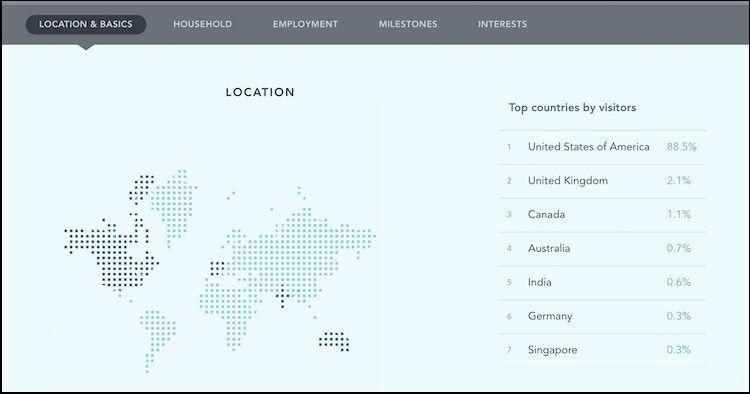
We include location, employment, and household information, as well as interests for your email subscribers.
This gives you additional insight into not only the demographics of your general web traffic, but also of those readers devoted enough to sign up for your email list.
These demographics, combined with your most popular posts, traffic sources, and a simple survey, provide the information you need to create a customer profile.
Get to Know Your Readers
Based on these information sources, piece together the information you need to target the ideal reader. Your customer profile can be an in-depth story of who exactly your subscribers are, or it can be more simple.
Whatever form it takes, be sure to focus on where your reader hangs out online, and what challenges they are facing (that they’re coming to you for help with). If you do that, you’ll have a killer persona created in no time.
Ready to find out your list demographics and simplify your email sponsorship strategy? When you create a listing in the Paved marketplace, advertisers will come to you, and you’ll get paid whenever you publish.
Sign up for Paved today to see how easy sponsored content can be.