
As a B2B company, you work hard to produce high-quality content. However, you also know that creating valuable, engaging material is only half the battle. That’s why creating an airtight content syndication strategy is crucial to reach new customers.
As a newsletter sponsorship platform, we love exploring new strategies to get your content to reach a wider reader base. Let’s dive into content syndication, the benefits, the drawbacks, and how it can work for your company.
What is content syndication?
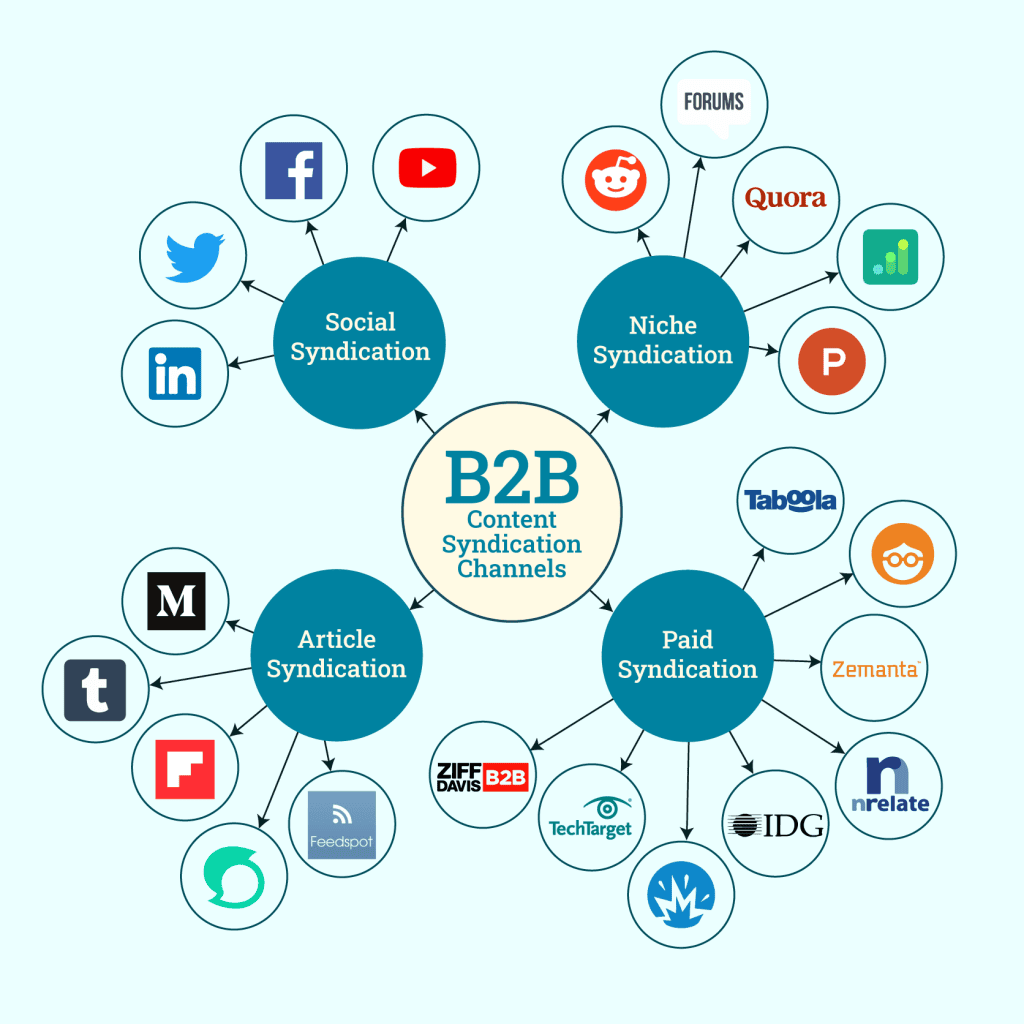
Content syndication is a strategic approach in marketing where you distribute your original content—be it blog posts, whitepapers, eBooks, infographics, or podcasts—to other websites or platforms. This method is designed to broaden your audience reach and increase traffic back to your own site. It’s an effective way to amplify your message and ensure a wider audience sees your valuable insights.
Content syndication vs. guest blogging
On the surface, syndicated content can look similar to guest blog posts. After all, both strategies involve promoting one organization by publishing content on another organization’s platform. However, it’s important to note the differences between the two to understand what works best for your business depending on your goals.
Guest blogging typically involves creating original content for another business or publication, which the partner organization will post on their own website. Content syndication, however, allows a marketer to reuse previously published content by reposting it on other sites.
Because of this distinction, many see content syndication as a more scalable model. Whereas publishing 100 guest blog posts requires a content creator to write 100 articles, a company can syndicate a single piece of content across 100 websites with minimal additional effort.
On the other hand, there are also some advantages to writing original articles for guest posts. For instance, because syndicating content involves reposting existing content, marketers may run the risk of publishing duplicated content. Fortunately, many are able to avoid penalties by taking the recommended precautions.
Why content syndication works for B2B companies
While syndication can be an effective content distribution strategy for any business, it’s especially recommended for B2B marketing. In some cases, a B2C customer may decide to buy your product based on an enticing ad or a persuasive testimonial. However, when pitching to business clients, you can expect them to conduct extensive research before making a decision.
Rather than trying to win over potential clients with an eye-catching advertising campaign, you’ll have to dedicate the effort to build trust over time. Syndicating content can help you do that.
Raise brand awareness
Getting on a business’s radar is the first step in converting them into a client. However, many B2B firms have traditionally neglected to prioritize brand recognition and awareness. According to a marketing survey by B2B International, only 54% of B2B firms have a program in place for measuring brand perceptions.
Luckily, by partnering with other organizations to publish your content, you can start building a strong reputation. In fact, a report by the Content Marketing Institute found that blog posts ranked as the highest performing type of content for building brand awareness.
Establish authority in your industry
Building trust and credibility is crucial in presenting your business as the right choice for prospective clients. After all, if you don’t know what you’re talking about, what could you contribute to another organization? That’s why it’s important to put your expertise on full display. By sharing unique and educational blog content, you can brand your company as a thought leader.
Reach a wider audience
Expanding your reach can be difficult when you’re confined to your own audience and connections. Many marketers use content syndication to tap into other networks and connect with readers who wouldn’t otherwise have found their website. As a result, they may be able to identify new personas to target or needs to tackle.
How to syndicate content effectively
In a perfect world, a successful content syndication strategy would consist of choosing a few blog posts at random and convincing other publications to republish them. However, it’s rarely that simple. In order to get results from your syndicated content, you’ll want to consider each decision carefully. In this section, we’ll go through some key steps of syndicating content.
Decide on a goal ahead of time
Before even picking what content to post or where to post it, think about what you want to get out of this effort. Are you aiming to boost website traffic? Increase lead generation? Conduct research on potential customers? Settling on an objective ahead of time will help guide your process and set metrics to determine whether the campaign was successful.
Choose your partner(s) wisely
Finding the right partner to syndicate your content can bring new life to your digital marketing strategy. However, making a bad choice can also work the opposite way. Backlinks from spammy websites can have negative effects on your business, from damaging your company's reputation to lowering your SEO rankings.
When reaching out to platforms to partner with, you’ll want to focus on a few key attributes:
- •Relevance: Find websites or publishers with similar audiences to your own. Make sure that their readers would be interested in your content, as well as your business offerings.
- •Readership: Seek out publications that get higher traffic than your own. In addition to introducing your content to new audiences, popular sites can also improve your SEO.
- •Reputation: Look for companies that have established themselves as authorities in your industry. If a website is already perceived as a go-to source on a subject, its recommendation will carry more weight.
Publish valuable content
As a rule of thumb, marketing experts typically advise against using content syndication to push sales. Most readers don’t click on an interesting article with the intention of buying a product on the spot. Therefore, seeing an aggressive sales pitch halfway down the page could turn them off and leave them with a bad impression.
For that reason, many marketers focus primarily on informational content that readers will find valuable. By fulfilling the needs of your target audience, you can start generating interest and creating positive associations with your brand.
Use proper content syndication practices
While successful syndicating content may promise a lot of upside, sloppy execution can drag down your business. Before launching your strategy, it’s important to take care of a few housekeeping items.
Vet websites and publishers
As previously mentioned, choosing the right partner is critical to your strategy’s performance. Before finalizing a deal, take a few minutes to research your potential syndication partners. In addition to browsing their websites to get a sense of their business, you can also refer to forums and review websites to see what other content creators are saying.
Create a canonical URL
Many types of content syndication involve republishing the same article to multiple websites. As a rule, the Google Search algorithm doesn’t promote duplicate content. Therefore, some marketers run the risk of their republished articles on third-party websites ranking higher than their own. Fortunately, by including a rel=canonical tag in the reposted article, you can indicate to Google that it’s not the original source.
Include a Noindex tag
Similar to the canonical tag, the Noindex tag prevents third-party sites from competing with your original web content. By adding the Noindex tag to your URL, you can tell search engines not to index your web page. In other words, it won’t appear on any search engine result pages.
3 ways to launch a content syndication strategy
Even if you’re sold on the value of content syndication, you’ll still need to decide on the right channel before launching a strategy. For the scope of this article, we’ve narrowed your options down to three platforms.
1. Reach out to blogs and websites in your niche
One of the most popular content syndication strategies involves connecting with relevant websites or bloggers and asking them to repost your articles. In some cases, this can be a win-win for both organizations. Some may be happy to put your post in front of their readers in exchange for posting free content on their site. Other partnerships may involve a trade-off, where they’ll syndicate your article if you’ll do the same for them.
However, other websites may charge a fee to publish your content on their blogs. In some cases, the added exposure may be worth the cost. Other times, it may be a red flag.
For example, syndication services like Taboola and Outbrain are known for advertising articles using clickbait headlines to boost traffic. While this strategy may increase clicks, it can also lead to a higher bounce rate and more unqualified leads.
2. Publish your own content on other platforms
While coordinating with other websites certainly can be part of your content syndication efforts, it doesn’t have to be. Even if your content marketing strategy is more of a solo endeavor, you can still expand your reach by reposting your articles to your own accounts.
Content syndication can be as simple as posting a link to your article in a relevant subreddit or Quora thread. Many businesses even unknowingly syndicate content by posting about their latest articles on social media platforms like Facebook or Twitter.
However, many marketers also republish entire articles on websites like Medium, LinkedIn, Business2Community or Facebook Instant Articles. Many of these publishing platforms offer benefits like brand customization options and improved user experience. Some even allow marketers to create RSS feeds to automate publishing.
3. Partner with a newsletter to feature your article
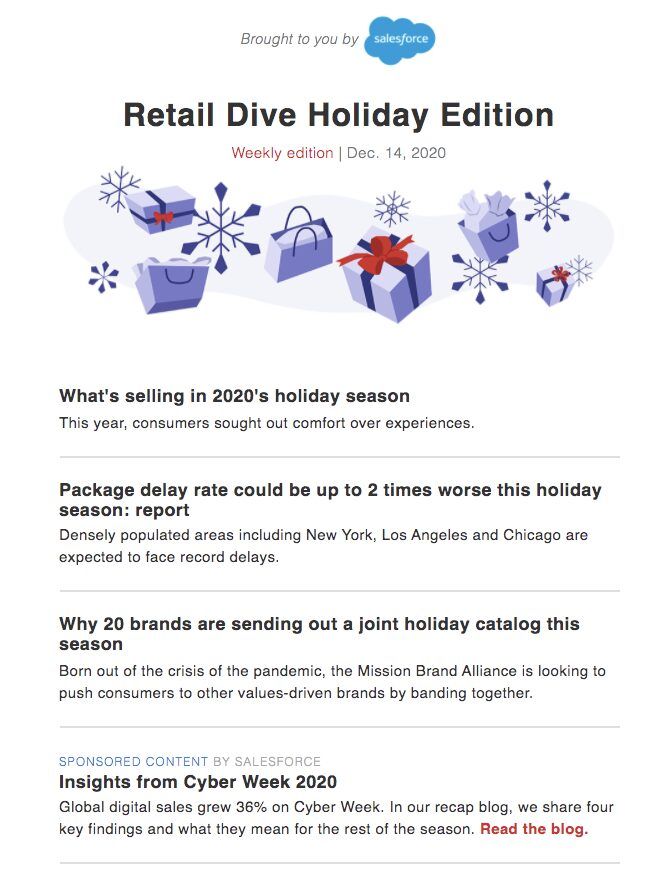
Getting a high-quality article featured in the right newsletter can bring in a lot of traffic, not to mention qualified leads. Readers typically scroll through email newsletters with the intent to educate themselves. Therefore, they’re often in the right mindset to engage with interesting content that relates to their topic of interest.

If you’re lucky enough, some newsletters may find your great content on their own and link to it for free. Unfortunately, most of the time, they need a little push. While the cost may be a setback for some marketers, many find it to be a worthwhile investment. What newsletter partnerships lack in affordability, they tend to make up for in timely results, reliable metrics and effective targeting.
Pulling off a newsletter content syndication strategy
Every type of content syndication has its pros and cons. However, many marketers have seen success in syndicating content with newsletters. Not to mention, that’s right in our wheelhouse. Let’s talk about how to use newsletter partnerships to expand your content’s reach and gain more leads.
Why newsletter content syndication stands out
Syndicating content with newsletters carries many of the same advantages as with traditional platforms. However, in some ways, promoting your content through newsletter partnerships brings unique advantages.
Avoid SEO risks
Getting your content featured in a newsletter can bypass some of the complications of republishing online. For one, you can avoid the risk of publishing duplicated content. If you’ve already nailed down rel=canonical and Noindex tags, this may be a non-issue. However, it may save you from the headache of back-and-forth emails with your confused syndication partners.
Direct traffic straight to your website
Typically, the goal of content syndication is to push your content to a larger audience, not to bring more visitors to your own website. However, unlike websites and blogs, newsletters will only publish a headline or short preview of the article. Anyone who wants to read the full piece will click the link to head to the original source, resulting in a boost of website traffic.
Get timely results
Tracking metrics is a key step in any content syndication strategy, regardless of the platform. However, some methods make that task more difficult than others. Oftentimes, republishing an article on another blog or website doesn’t magically make visitors start reading it.
To get readers’ attention, you need to launch another initiative to promote your content. Even then, it’s hard to know at what point you’ll get a full picture of your readership and engagement. Will most readers see it in the first week? The first month? The first year?
With newsletter sponsorships, you can get your content directly in front of subscribers, so there’s no need to promote it yourself. Additionally, you can focus on a more limited timeframe in which you can expect readers to engage with your article. This can make it easier to evaluate and compare your campaign’s stats. Better yet, if you sign up as an advertiser with Paved, we can do it for you.
Sponsor newsletters with Paved to gain more qualified leads
Join Paved to browse 2,000+ newsletters and reach over 253+ million subscribers across every niche.
Keep in mind that sharing your content through newsletter partnerships isn’t a one-time item to check off of your to-do list. Rather, it’s an ongoing process through which you can build a reputation and connect with new audiences. Running frequent newsletter content syndication campaigns is crucial in building awareness and generating top-of-the-funnel traffic.
Case study: AirCall and Paved
Recently, AirCall dialed up their marketing game by teaming up with Hubspot for a dynamic comarketing venture. They collaborated on a downloadable Sales Plan Template:

On Paved, they tapped into the power of content syndication, spotlighting their sales template in top-tier newsletters like as Fast Company, Startup Buffer, and Scott Clary's Newsletter.
This strategic move was all about amplifying their reach and connecting with top tier sales and business professionals:
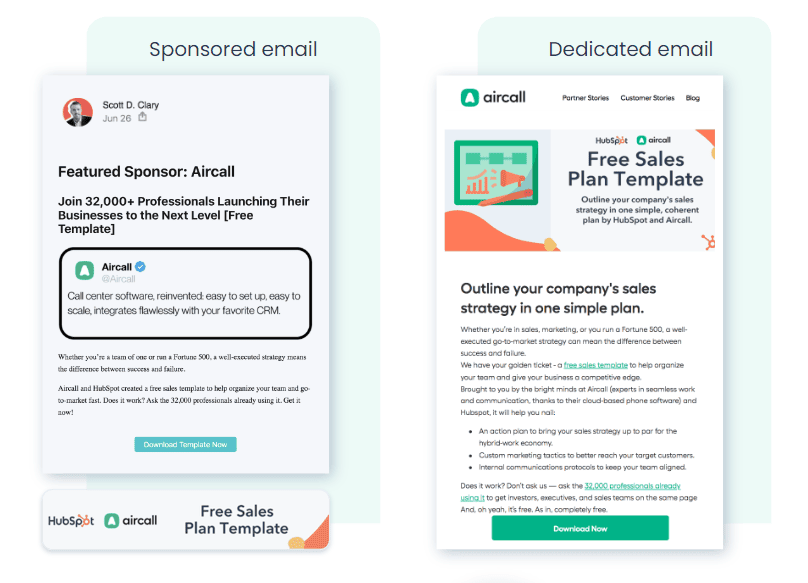
The outcome: Aircall gained 2,100 new leads in under two months through content syndication on the Paved Marketplace:
“Paved is by far the coolest and easiest-to-use platform for content syndication I've experienced. I love the self-serve interface for uploading creatives and requesting new campaigns, as well as browsing the marketplace for discovering new publishers” -Aircall
Final thoughts
Content syndication emerges as a pivotal strategy for B2B companies aiming to establish a strong digital presence and foster trust with potential clients. By republishing high-quality content across diverse platforms, businesses can significantly extend their reach and reinforce their brand identity. This approach not only elevates brand awareness but also caters to the meticulous research process typical of B2B clients.
With the right precautions to avoid duplication penalties, content syndication can be a scalable and efficient method to amplify a company’s message and thought leadership in the industry. Ultimately, it’s a strategic move that can lead to a robust content distribution framework, driving traffic and nurturing prospective business relationships.
To launch your content syndication strategy, head to our marketplace and find the right newsletter for your campaign. If you haven’t signed up with Paved yet, make an account here.