Amidst the hot marketing trends that promise to ‘kickstart your growth’ or revolutionize business operations, conversion rate optimization (CRO) is a time-tested method of building on your existing success and driving sales. This pillar of marketing strategy is as relevant now as ever, perhaps more so, as brands fight tooth and nail for every bit of inbound traffic and a potential sale.
To complicate matters, conversion rate is a pretty broad and deep subject, with a range of tactics within to help boost that all-important conversion rate. For smaller businesses that have yet to invest in the process, this presents a daunting challenge.
In this guide, we'll demystify the process and show how to get started with CRO for your brand.
What is conversion rate optimization?
Conversion Rate Optimization (CRO) is the art and science of enhancing your website or newsletter to boost the percentage of visitors who take the desired action, like making a purchase or signing up for a newsletter. It’s about creating a user experience so compelling that visitors can’t help but convert into customers. Think of it as fine-tuning your digital storefront to turn window shoppers into buyers.
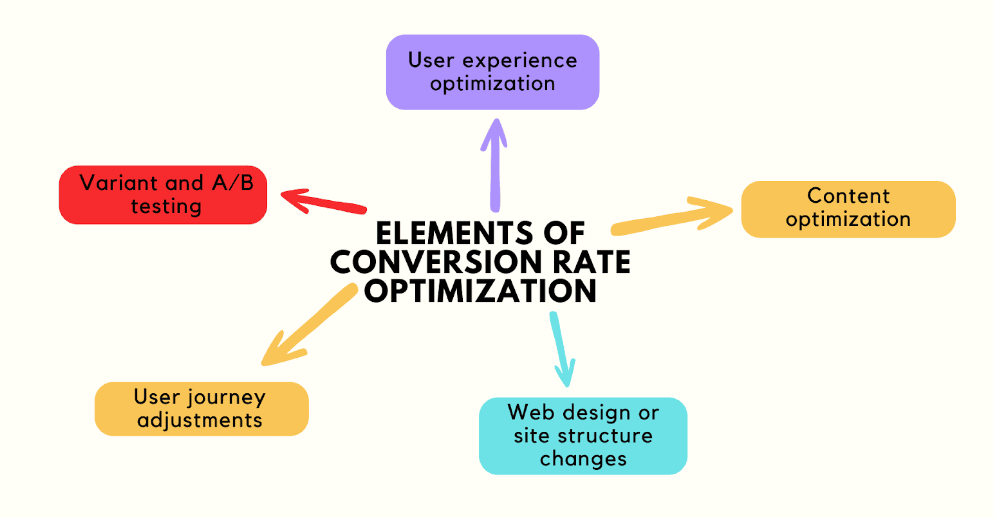
Undoubtedly, it's a broad term, comprising several tasks and tactics you can employ to improve your website. Each of these activities has a primary goal in mind; improving the likelihood that a visitor to your website will convert. Some of the most common activities include:
- •User experience optimization
- •Content optimization
- •Web design and site structure changes
- •User journey adjustments
- •Variant testing and A/B testing
A conversion can come in many forms—defined by you—but is generally thought of as a purchase or inquiry. Other softer conversions could include downloads, contact form submissions, or email sign-ups. With every successful change you implement across your domain, the rate at which visitors will convert will grow in return, leading to boosted sales and a stronger user experience.
The greatest part of CRO is that it leverages already earned traffic to your site and equally supports future growth. This reciprocatory process helps boost your SEO, PPC, email, and social channel performance, leading to sustainable growth.
How important is conversion rate optimization for my industry?
Conversion rate optimization is most notably associated with retail industries where visitors are actively seeking to purchase a product, as the direct correlation between visit and purchase makes an ideal fit when measuring conversion rates over time.
That isn’t to say that other industries can’t benefit from effective CRO. Any business that drives business through its site—such as through inquiry forms, via landing page email campaigns, or sourcing contact information—can make its earned traffic go further by making adjustments to the user experience and on-site messaging. We recommend any brand that relies on its site as a primary source of business investigates current performance and opportunities for CRO across the site.
Conversion rate optimization 101: 5 steps to success
While the specific nature of the activity will change depending on the task you embark on, the general process of CRO remains the same, and this should serve as your go-to-market strategy framework. The majority of CRO activity will focus on these five key steps, which will ensure you get the best results from your investment.
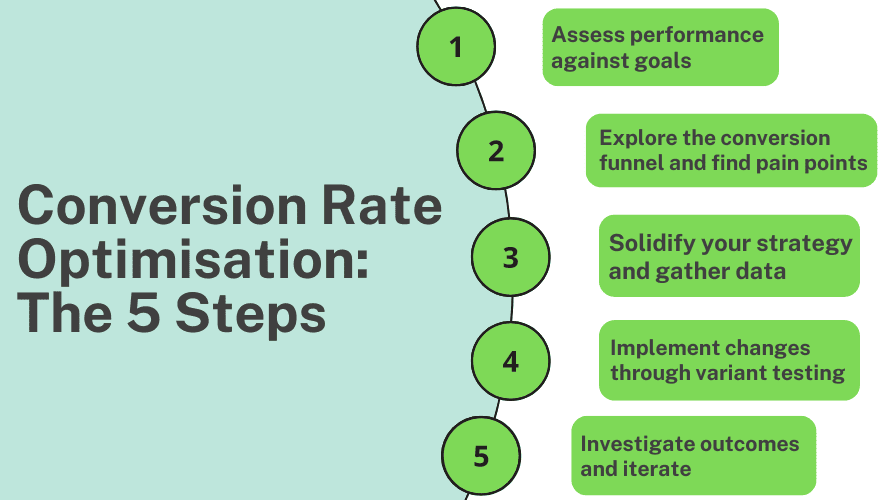
1. Assess your current performance against your goals
Before any direct changes are made, it’s critical that we spend the time to understand where we are and where that is relative to our goals.
For e-commerce sites, especially in retail, a common conversion rate for sales ranges from 2.5% to 3%. Consider this as a starting point for your performance metrics. However, remember that your specific industry and whether your site focuses on inquiries can influence these numbers.
Likely, you’ll already have a feel for areas of the site that aren’t up to scratch, so be sure to note these down and investigate in greater depth when the time comes.
Soft research can be a good idea during this stage, such as using social media for competitor analysis and the sentiments their customers have. If you have sales data that can be drawn from here, dig down into sales performance and note any products that are under or over-performing. We’ll be using this data in step two.
2. Explore the conversion funnel and identify pain points
It’s time to dig into the gritty details and learn exactly where work needs to be done. Several tools can help provide insight into your conversion funnel, such as heat mapping software and AI-driven analytics, but even trusty old Google Analytics will shed plenty of light on the situation.
Google Analytics provides a range of event tracking features to monitor sales, revenue, and engagement across your site and also has user journey flow diagrams to show exactly how visitors are navigating your site and where they are dropping off during the user journey. Whenever you see a significant loss of traffic, note the page and dig deeper.
Which page is the next intended page to travel to? Are users getting lost? What on-page elements are available to guide users to the next ideal step? These kinds of questions will help you to learn any pain points in the user journey and provide some places for optimization to take place. Always keep your target audience in mind when asking these questions and cater to what matters to them most.
3. Solidify your strategy and gather data
With the exploratory stages complete, it’s time to lay out your optimization strategy. Make a living document that details the changes you plan to make on specific pages, systems, or content, and how you intend to monitor the impact of those changes. Keep it up-to-date and as changes are made be sure to update it.
Keep in mind that without proper monitoring in place, such as user behavior metrics in Google Analytics or hard conversion data, you will be working in the dark; have the data collection tools in place early.
For example, if your business’s main goal is to drive purchases of your AI call center service, but you notice that many users drop out during the checkout process, then it’s time to take action. Use the acquired data to adjust key steps in the purchasing process; provide additional information on pricing or features, add call-to-actions in more prominent places on the product page, and simplify the actual checkout process itself. All of these changes can lead to a better user experience and a boost in conversion.
4. Implement changes through variant testing
For many situations, such as content changes or on-page structure adjustments, we can leverage the power of variant testing tools to help learn how updates affect performance.
Variant testing is sometimes referred to as split testing or A/B testing. It is the technique of implementing changes to your brand, webpages, email content, etc. and serving multiple different variants of that as users visit or engage with the element in question. Plenty of software packages facilitate this activity and gather data on how each is perceived.
With enough traffic, you’ll quickly determine which version is working best and decide whether to make that variant the permanent iteration of the page or element in question. To get the best results, always remember to rotate the unedited version alongside altered ones during the testing phase.
Image sourced free for use from Pexels
5. Investigate outcomes and iterate
After any optimization work, the final step is to take stock of how the activity or project went and whether you were successful in your CRO efforts.
Through the previous four steps, you should have generated a huge amount of data to work from to determine how effective your optimization work has been, so take one last opportunity to review and think about your next optimization task to tackle.
If you’re unhappy with the results of a specific change, don’t be alarmed. Instead, look at how you can further improve or alter the offending article.
It’s unlikely that you’ll land on the perfect optimization from the get-go, especially during the early stages of CRO activity, so don’t get discouraged and keep working on pushing that percentage higher. As the industry and user behavior changes, you’ll need to iterate and reconsider your site’s user experience.
Next steps
Hopefully, you’ve now got all the information you need to dive into CRO for your business. As with all marketing changes, be sure to gather and follow the data when implementing your strategy, and start with smaller projects to find your feet.
The journey of conversion rate optimization will stretch the entire lifespan of your business and should be considered a key tool in your marketing arsenal moving forward. Get creative with your optimizations, explore ways to excite and entice visitors, and focus on making the on-site experience as engaging as possible. With enough effort, you’ll reap the rewards and see a marked improvement in your sales performance.