Ask 100 newsletter operators about the toughest part of running their business, and most will point to one challenge: finding email subscribers.
Yet, many people do it successfully.
While there’s no shortcut to growth, there are proven strategies that can help you attract more subscribers. The key is placing compelling offers wherever your brand gets attention—whether that's your website homepage, blog, social platforms, or in-person events.
Let's dive into the most effective tactics for growing your list.
How to collect more email subscribers
Before you implement the tactics below, you need a way to collect email subscribers. For most of the strategies, this means using email signup forms, pop-ups, and landing pages where people can submit their email address.
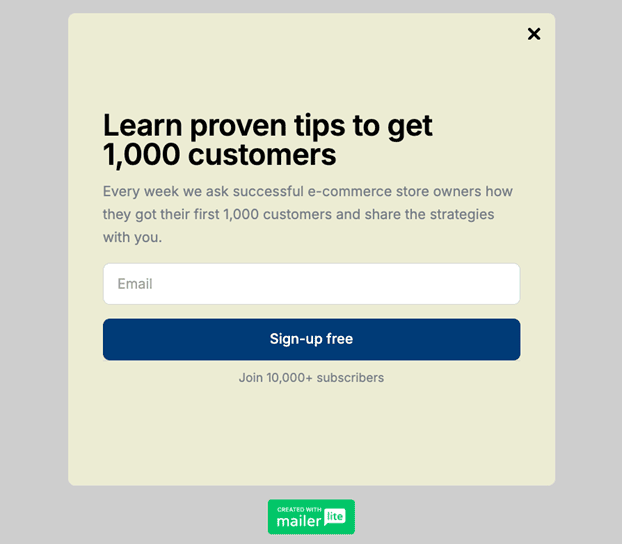
A good newsletter signup or pop-up form typically has the following content:
- •An eye-catching headline:
This should include the main value proposition of your newsletter - •A subtitle:
Build on the main value - •Social proof:
Mention the number of subscribers you have, the companies they work for, or add reader reviews - •An email entry field:
You could add other fields like name or industry, but it’s usually best to keep signup as easy as possible - •A CTA button:
Add a button with compelling text that encourages potential subscribers to sign up
Here’s an example of a pop-up for a newsletter about e-commerce marketing. It includes all the above elements.
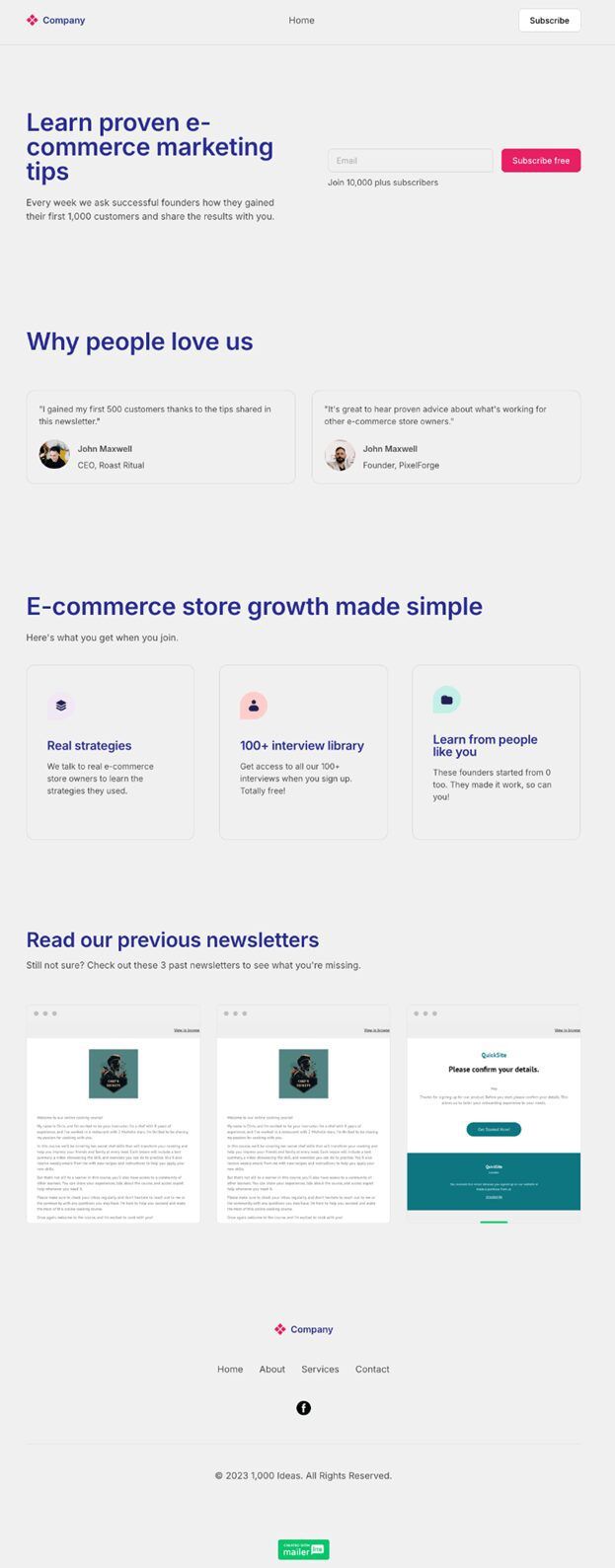
Landing pages are similar, but you can include extra content to help people convert. Here are some content types you could consider adding:
- •Reviews:
Ask subscribers to review your newsletter and add them to your signup page - •More benefits:
Include more information about what people will gain from subscribing to your newsletter - •Information about you:
Consider telling people about yourself so they know why they should read your newsletter - •Links to previous newsletters:
Let people see the type of content they can access by signing up
Here’s an example newsletter signup webpage template with all the features mentioned above so you can see the types of content you can include.
14 strategies for newsletter list growth
Here are 14 strategies you can use for newsletter list growth. They all work, but the most effective one for you will depend on your audience, newsletter topic, and personal strengths. Choose one or two to focus on and then double down on any strategy that gains momentum.
1. Start with your network
Our first tip is the easiest way for a new newsletter to get its first few hundred subscribers: ask people in your network to sign up!
The tip works because people you know want to hear from you. Just be sure to ask the right connections: your LinkedIn followers would love to hear your thoughts on digital marketing, while your run club will be keen to follow your marathon journey.
This initial base is a great opportunity to discover what content people resonate with. You can then hone your craft before growing your list further.
2. Offer lead magnets related to website content
Your website is a valuable asset for list building, especially if you already generate traffic. Creating lead magnets that directly relate to your content and promoting them with forms is an effective way to convert website visitors.
The key to successful lead magnets is to create ones that directly relate to the content the visitor is reading.
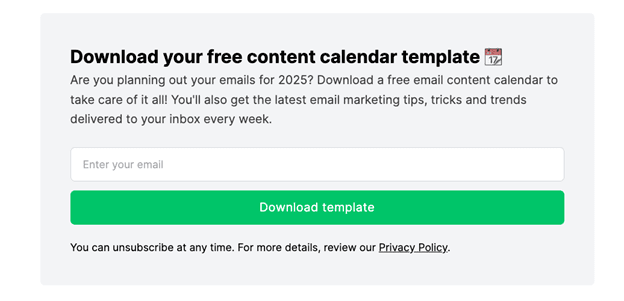
For example, at MailerLite, we offer a content calendar for all our monthly newsletter idea articles. It’s a good fit, and it gets plenty of downloads.
Here are some ideas for different industries:
- •Finance newsletter: Top stock picks guide or tax-saving strategies in a free ebook
- •Marketing newsletters: Trends report or in-depth analysis of successful strategies
- •Health newsletter: Workout plans or health-tracking spreadsheets
Consider grouping your content into multiple categories and creating a lead magnet for each one. This allows you to add relevant lead magnets to your content without needing to create a new resource for each page.
Once you’ve created your resource, collect sign-ups with embedded forms and pop-ups. Add the former to your posts' content and boost your offer's visibility by showing pop-ups.
A good rule of thumb is to wait 30 to 60 seconds after the user lands on the page before showing the pop-up. This ensures the visitor gets value from your post before the interruption. Alternatively, use floating bar pop-ups or pop-up teasers to highlight your offer in a less obtrusive way.
Experiment with what works on your site, and check your page analytics to see how long people typically spend on a post.
3. Gate your previous newsletters
If you don’t have time to create separate lead magnets, consider gating access to your past newsletters so people can only access them if they hand over their email addresses. This will be especially effective if the topics of your newsletter are evergreen.
Be aware that content gating will cause reader friction since visitors won’t get any value from the page if they don’t sign up. You may see a decrease in time on page or an increase in bounce rate. When implementing this strategy, consider whether this is worth the potential increase in subscribers.
As with all newsletter generation tips, experimentation is key!
4. Create free tools and resources
Building free tools that solve real problems for your audience can be a powerful list-building strategy. Just create the tool and ask people for their email address to access it.
The good news is that you don't need to be a technical wizard to make this work. No-code and AI make it possible for anyone to create valuable resources.
Some examples of powerful tools you can create include:
- •Industry directories
- •Calculators
- •Template libraries
- •Mini-courses
- •Curated resource collections
Think about the types of tools that would appeal to your subscribers and do some research to discover the best way to create them. Popular no-code tools include Notion, Webflow, Softr, Airtable and Bubble.
For example, if you run an email marketing newsletter, you might create a simple social media calendar tool using Airtable or a template collection using Notion.
5. Build an engaged community
Communities are one of the best email list-building tactics. Like free tools, they have high perceived value and you can easily create them with readily available platforms like Slack and Circle.
Start by defining how a community could be useful to your audience. Ask the people on your list what would bring them value and then invite them to join.
This could be:
- •Expert discussions
- •Networking opportunities
- •Virtual work-togethers
- •Exclusive resources
- •Weekly live sessions
- •Job boards or opportunity-sharing
Once you have a thriving community made up of your existing subscribers, make membership part of your newsletter subscription offer. Create a compelling landing page that communicates your community's benefits alongside the benefits of your newsletter. You can then share this on social media, your website, or other platforms you have access to.
Be sure to automate the post-signup process with an automated email sequence so new members receive immediate access and clear instructions for getting started.
6. Run strategic contests and giveaways
Contests involve giving anyone who joins your list within a particular period a chance to win a prize. They can grow your list rapidly, but require careful planning to attract the right subscribers.
The key is choosing prizes that appeal to your target audience while deterring freebie hunters. It's better to gain 100 engaged subscribers than 1,000 who never open your emails or unsubscribe right away.
For example, if you run a design newsletter, offering a design consultation or free access to a course will appeal to people interested in design. On the other hand, a free iPhone will appeal to people interested in design and pretty much everyone else on the planet.
You’ll get more subscribers with the latter offer, but the majority won’t bring any value.
7. Host virtual events and webinars
Webinars and virtual events can be powerful list-building tools, especially when they offer practical, actionable value. The key is choosing topics that solve specific problems for your audience.
Plus, anyone who subscribes to a webinar is highly engaged with your brand. They’ll probably be a high-value subscriber too.
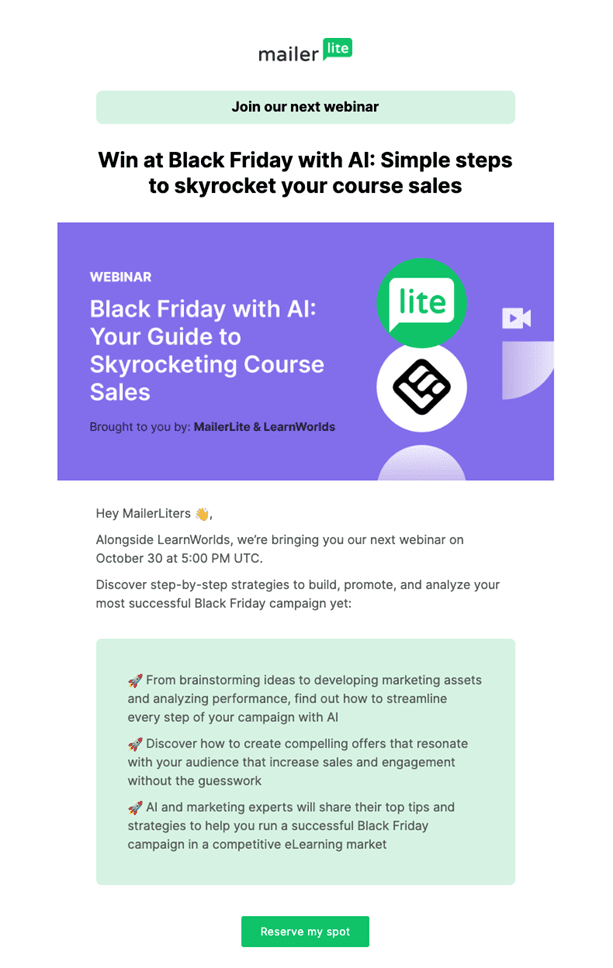
Make your registration process seamless by creating a dedicated landing page for each event. Include all the relevant information and create an automated event email sequence that confirms attendance and reminds respondents that the event is upcoming. See an example reminder email in the screenshot below.
Increase the value of your sessions by recording them to use as lead magnets for future subscribers. This maximizes the value of your effort and creates an evergreen list-building asset.
8. Master social media conversion
Growing an audience on social media and then converting these people into email subscribers is a proven way to grow your list. It works because social media channels have built-in audience growth mechanisms that you don’t get with a newsletter.
The issue is that most social media platforms want to keep people on the app, not send them to your website. But, there are ways to game the system which can lead to effective subscriber growth. The key is to keep an eye on the tactics that are currently working.
Here are some strategies that people are succeeding with at the time we published this article.
- •Using automated DM tools on Instagram.
Ask people to comment on your post to receive a lead magnet or offer. Then use a tool to automatically send a message to people who comment with a link to your sign-up page. Not only will you get subscribers, but you’ll increase engagement on your post! - •Pin newsletter promotion posts to your profile on Instagram and X.
People who visit your profile will see the post and may click through. - •Promote your newsletter with video content on LinkedIn.
The LinkedIn algorithm seems to be pushing video, so you can get a lot of exposure if you mention your newsletter.
The key is understanding each platform's culture and adapting your approach accordingly. Follow popular newsletter creators in your niche to see the strategies they use.
9. Collect emails on purchase
If you sell products or services, your checkout process is a natural opportunity for list building since new customers need to provide their email to create an account with your store.
You can then either manually add people who buy from your store to your email list, or set up an integration that adds them automatically.
Privacy regulations such as GDPR require you to gain consent to send people emails. Make sure you include an email opt-in checkbox during the checkout process and only add people to your list who say they want to hear from you.
As with other methods on this list, you can increase the chances of people signing up by highlighting the value of your newsletter or offering a freebie, lead magnet, or exclusive discount.
10. Master paid acquisition
Paid advertising can be a fast way to build an email list. But it requires careful planning and management to ensure you spend your money effectively.
Before starting any paid campaigns, calculate the lifetime value of a subscriber. This lets you know how much a subscriber is worth to you. You can then run ads with the goal of attracting subscribers at below this cost.
If you can’t hit this goal, you have to either change your strategy or attempt to increase the value of each subscriber. Do this by adding more newsletter monetization methods such as paid ads, digital products, affiliate marketing, or services.
Start with small budgets and scale what works. Meta Ads is the most popular platform for newsletter ads, but you can consider testing different platforms like Reddit or LinkedIn.
11. Create a referral engine
A referral program is a cost-effective newsletter list growth engine. It offers incentives to existing subscribers who promote your newsletter to people they know.
The way it works is that you offer a gift to subscribers who successfully refer your newsletter to others. This could be a gift voucher, merch or access to exclusive content.
You could even consider tiered rewards based on referral numbers. For example:
- •1 referral: Digital resource bundle
- •5 referrals: Premium newsletter access
- •10 referrals: One-on-one consultation
- •25 referrals: Physical product or high-value prize
Running a referral program is easy thanks to referral tools. These give each subscriber a unique link that tracks their referrals, provide a dashboard that lets them see how many referrals they’re on, and automates the distribution of prizes.
12. Master offline collection
Don't overlook offline opportunities to grow your list. These can be effective since you typically have a strong connection with people you meet offline.
When starting out, The Morning Brew got its first few thousand leads by pitching the business in college lectures and then going around with a pen and paper to collect addresses. It was hard work, but each lecture led to hundreds of new subscribers.
With this in mind, be sure to collect email subscribers at any relevant events you attend. Go with a pen and paper like The Morning Brew, or use an app to streamline the process and sync offline subscribers with your email marketing software provider.
Like with any other method of subscriber acquisition, ensure you're collecting proper consent and following data protection regulations.
13. Leverage community platforms
Online communities such as Reddit can be valuable for list building. But, be careful with how you mention your newsletter since most communities won’t allow outright promotion.
The first thing to do is look for relevant communities that allow some promotion. Then offer a ton of value in your posts and comments. One way to do this is to create detailed posts that solve specific problems, then mention your newsletter as a source for similar insights.
Also add links to your newsletter in your community profiles. This makes it easier for people who click on your profile to join your list.
14. Build partnerships with other newsletters
Partner with other newsletter creators to promote each other. This can be an effective way to grow since the people you reach have a proven interest in reading newsletters like yours.
The key is finding the right partners. Look for newsletters that:
- •Share your target audience
- •Maintain similar quality standards
- •Have comparable list sizes
Consider creating joint content, running cooperative promotions, or simply exchanging mentions in your respective newsletters. You can also use a tool to enable people to opt in to receive other newsletters when they join your list.
More best practices for sustainable subscriber growth
As you implement these strategies, keep the below principles in mind. They will help you focus on the most impactful newsletter growth strategies that result in high-quality, engaged email subscribers.
Perfect the post-signup experience
Creating a welcoming post-signup experience will provide a good first impression and can increase newsletter engagement.
At the very least, set up a welcome email that explains more about your newsletter and asks people to make your address a priority sender. You can also include links to your previous content since people who sign up likely want to hear from you right away.
Also consider setting up an evergreen content sequence. Turn the best content from previous newsletters into a marketing automation sequence triggered by someone joining your list. This way, people will hear from you without having to wait for your next newsletter.
If you have a paid product or offering, you can also start a nurture sequence that provides more information about this offer and encourages people to buy.
Track everything
It’s essential to monitor engagement metrics for each acquisition channel. Look beyond simple signup numbers to understand how the people you bring in engage with your content.
You can do this by grouping your subscribers based on the channel they use to join your list. Then track metrics such as open rates, click-through rates, and even orders for each group.
With this information, you can discover which methods to focus on. You may find that a particular paid ads channel costs 50% more than another, but that the more expensive channel leads to subscribers who are 75% more valuable.
In this case, it can be worth focusing on the former channel, despite the higher cost of acquisition.
Protect list quality
Never buy email lists or use questionable acquisition tactics. A smaller, engaged list is far more valuable than a large, unresponsive one.
Purchasing a list goes against privacy regulations in many regions since the email addresses you buy never opted in to receive your content.
Even if purchasing a list is legally ok where you live, these lists typically show much lower rates of engagement since they never signed up for your content.
Test continuously
Regularly test different aspects of your signup process. Use A/B testing to see how different offers, designs, and messaging impact how effectively each method converts.
You can also test out different types of acquisition. Even if you’re seeing success with one method, putting some of your efforts into new ones can help keep you ahead of the curve.
Finding email subscribers takes time, but it’s well worth it
Remember, list building is a marathon, not a sprint. It takes time, but by being consistent with your efforts you’ll start to grow a resource that can be extremely valuable.
You don’t need to use all the above strategies. Just pick a handful that make sense for your business and double down on those that work.