For an ad to be successful, a lot of things have to go well. You’ve got to partner with the right sponsors, price your advertising space effectively, and choose the best ad placement.
Sometimes, despite our best efforts, mistakes happen, and ads underperform. Enter: makegoods.
A makegood is a term for a free adjustment or credit provided to an advertiser by a publisher. This type of credit is supplied when an ad has a significant performance issue.
In this guide, you’ll learn about email advertising makegoods, and how the makegood resolution process helps publishers and their sponsors get the best results.
Why do advertisers or sponsors ask for makegoods?
If an ad gets significantly worse results than expected, advertisers will request a makegood. This helps them recover the cost of a severely underperforming ad campaign.
A picture is worth a thousand words, so here’s an example. Check out the placement of this cancer prevention billboard in the UK. Notice the problem?
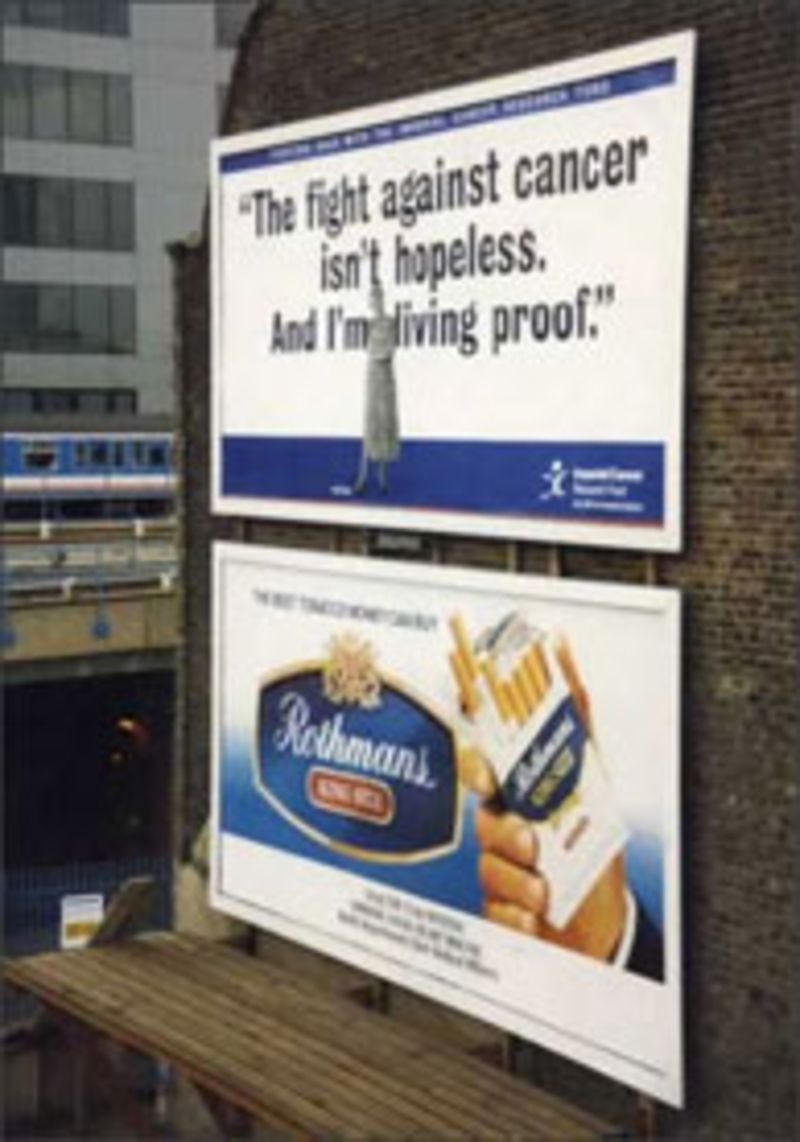
In a case like this, the advertiser is entitled to a makegood since the effectiveness of the cancer prevention campaign is undermined by the cigarette ad below it.
The problem was caused by the person who chose the billboard’s placement—not the advertiser. So, it’s the billboard owner’s job to “make good” on the investment the advertiser spent on the ad placement.
To resolve the issue and complete the makegood, the billboard owner would need to run the cancer prevention ad again in a new spot for free—minus the carcinogens next time.
Do makegoods happen in email ads and sponsorships?
From time to time, yes. Makegoods can happen in email newsletter sponsorships.
Several circumstances—from high bot click rates to ad placement mistakes—can trigger the makegood process.
Here are four situations where an email advertiser might request a makegood from a publisher:
- •Unusually Low Engagement
If a sponsored email gets unusually low click-through rates (CTR of 1% or less), the advertiser may request a credit or makegood. - •Too Many Bot Clicks
If email campaign metrics show high bot clicks (50% or more of all total clicks), advertisers are entitled to a makegood. - •Placement Issues
Placing the email ad in the wrong section or next to questionable or conflicting material entitles the advertiser to a makegood. - •Display or Graphics Problems
Any ad display issues (not caused by the advertiser) may trigger the makegood process. This includes sizing errors, pixelation issues, indecipherable text, or other graphics issues.
Why is the makegood process important for newsletter publishers?
If a sponsorship or ad in a newsletter was affected by any of the performance issues listed above, it’s a best practice to negotiate a makegood with the advertiser. Traditionally, this is done by optimizing the ad and re-running it in a different spot for no extra charge.
Makegoods are an important part of the relationship between sponsors and publishers. By keeping the relationship with sponsors intact, publishers can increase their chances of earning more sponsorship opportunities in the future.
What’s the makegood process for Paved?
If a sponsor asks you for a makegood on one of your campaigns, don’t worry. Paved is here to help. With some quick adjustments, you can get your sponsorship on track.
Here’s what you can expect from the Paved makegood process:
- The publisher will receive a notification from Paved that an advertiser has requested a makegood.
- The publisher should supply an alternate offer to the advertiser as a makegood. Options include alternative ad placements to boost performance or promoting the advertiser’s content on different social platforms.
- Once the advertiser and publisher agree on terms, the advertiser can prep the new assets and choose a run date.
- Next, the Paved team syncs with the advertiser to supply tips for better results next time. Tips include advice on improving the ad copy, calls to action, subject line, and visuals to help the sponsorship resonate with the publisher’s audience. We also may suggest a higher-traffic run date for better engagement.
How can publishers prevent makegoods?
As a newsletter creator, it can be frustrating to learn that an advertiser has requested a makegood– especially after trying to do everything right.
However, it’s important to note that most makegoods are caused by low subscriber engagement. This means that ultimately, the issue can be prevented by adopting a few list management improvements like pruning your list and removing bots.
For full instructions and tips on keeping your list at its healthiest, read our posts:
https://www.paved.com/blog/email-bot-clicks/
https://www.paved.com/blog/how-to-run-a-newsletter-re-engagement-email-campaign/