


You’re evaluating newsletter sponsorships and you keep running into the same question: sponsored email or dedicated email? Both show up on publisher media kits. Both promise engaged audiences.
But they’re not the same thing, and choosing the wrong one for your goal can mean wasted budget, muddled attribution, and a harder conversation with your team about whether the channel actually works.
This guide skips the definitions-first approach and gets straight to the decision. Here’s what we’ll cover:
- When sponsored email placements are the smarter buy
- When dedicated emails are worth the premium
- How to combine both when you’re running a fuller newsletter sponsorship strategy
What sponsored emails and dedicated emails are
Before the decision framework, a quick grounding on what each format actually delivers.
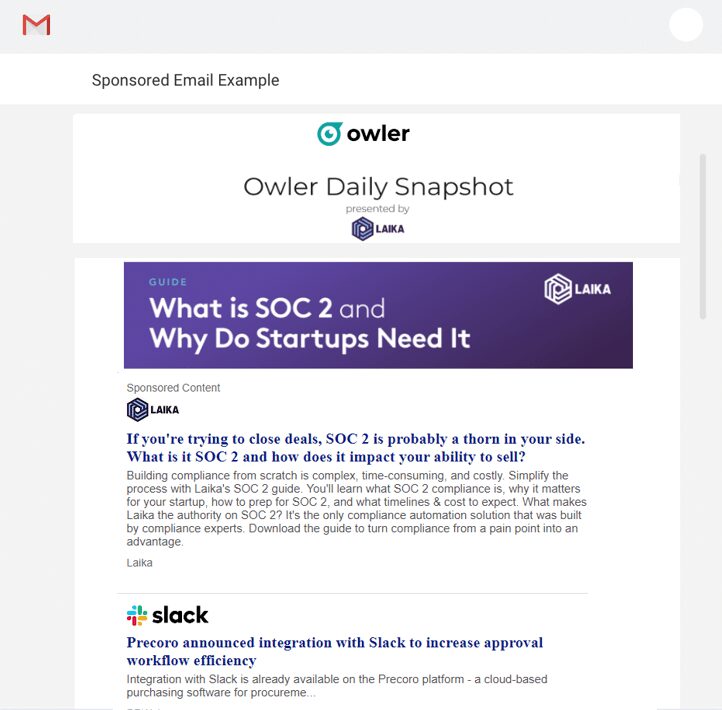
A sponsored email places your ad inside an existing publisher newsletter, alongside their editorial content. Your placement shares the email with the publisher’s regular send. Readers are there for the content; your ad earns attention within that context.
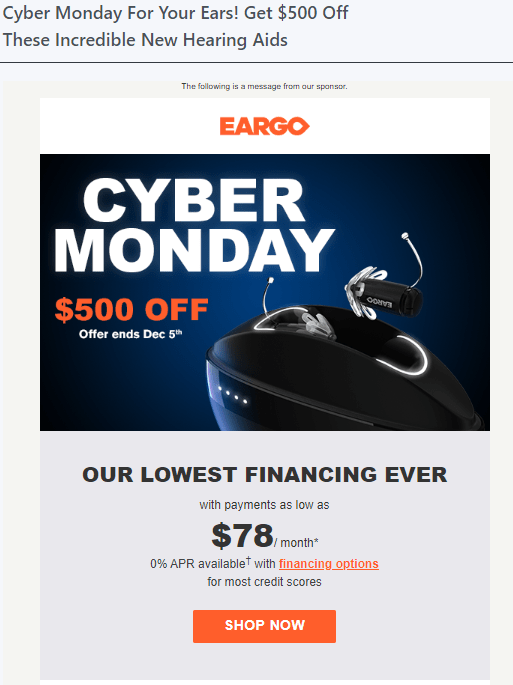
A dedicated email gives you the entire send. The publisher mails their list on your behalf, and your message is the only thing in the inbox. More space, more control, more focus, and a higher price tag.
| Sponsored Email | Dedicated Email | |
|---|---|---|
| Placement | Inside a newsletter alongside editorial content | Standalone send, full email |
| Attention level | Contextual, shared | Concentrated, exclusive |
| Message depth | Shorter ad unit (image + copy + CTA) | Full narrative, multiple CTAs |
| Typical cost | Lower CPM, pay per placement | Higher flat fee or CPM |
| Best for | Testing, frequency, multi-publisher reach | Launches, events, high-focus campaigns |
| Creative ask | Lightweight | Higher effort |
The difference isn’t format alone. It’s how much of the reader’s attention you’re buying, and how much message depth you need to convert them.
When sponsored emails are the better buy
Sponsored placements are the default starting point for most advertisers entering newsletter sponsorships, and for good reason. The cost-per-placement is lower, the creative lift is smaller, and you can run across multiple newsletters at once to learn which audiences convert.
The core advantage of sponsored emails is optionality. You’re not betting a large budget on one send to one audience. You’re distributing spend across publishers, testing offers and messaging in a live environment, and building a picture of what works before you commit to premium inventory.
Sponsored emails are the better buy when:
- You’re new to newsletter sponsorships and want to validate the channel before scaling
- You’re testing multiple publishers and need comparable data across audiences
- Your offer benefits from repeated exposure — newsletter readers who see your brand across multiple issues convert better over time
- Your creative is lightweight — a strong headline, one image, and a clear CTA is enough
- You’re running an always-on program where consistent frequency matters more than any single send
- Your budget is limited and you need to maximize reach-per-dollar before moving into premium placements
Placement positions inside sponsored emails
Not all sponsored placements are equal. Most newsletters offer multiple positions within the same send, and where your ad appears affects visibility, click rate, and price. Think of it like newspaper ads: inventory above the fold commands a premium because readers don’t have to scroll to see it.
Ethan Brooks, former editor of The Hustle, recommends publishers offer three tiers: a premium slot, a downsell, and a loss leader. As an advertiser, you can use that same structure to your advantage.
| Position | What it is | Best for |
|---|---|---|
| Top / primary | First ad unit, above editorial content | High-visibility launches, strong offers, brand awareness |
| Middle | Placed within editorial content | Contextual fit, native feel, mid-funnel offers |
| Footer / classified | Short text-only unit at the bottom | Budget testing, low-lift offers, link-driven CTAs |
| Solo / exclusive | Only advertiser in that send | More focus than a standard sponsored slot, less cost than a full dedicated send |
Top placements command the highest CPMs, but middle placements often punch above their price because they sit inside content readers are already engaged with. Footer and classified slots are worth testing when you want low-cost impressions across a large list before committing to a primary slot. If you’re new to a publisher, starting with a footer placement is a cheap way to gauge whether their audience responds to your offer at all.
One thing to calibrate: sponsored placements are measured best by clicks, conversions, and cost-per-acquisition, not open rates. Open rates tell you about the publisher’s list health, not your campaign performance.
When dedicated emails are worth the premium
Dedicated emails cost more, and they should. You’re buying the publisher’s entire send, which means your message gets the reader’s undivided attention. That’s a different kind of inventory.
The premium makes sense when your campaign needs focus, not just reach. A product launch, a limited-time offer, a major event, or a message that requires more than a single image and three lines of copy — these are the situations where a dedicated send earns its price.
Pros of dedicated emails:
- Full creative control over the email experience
- No competing ads or editorial content pulling attention away
- More space for storytelling, multiple CTAs, and richer offers
- Better suited to campaigns where message complexity matters
- Stronger fit for high-value conversions (demos, trials, event registrations)
Cons to weigh:
- Higher upfront cost, often 2-3x a comparable sponsored placement
- More creative effort required — a weak dedicated send is an expensive weak send
- Less useful for testing; you’re committing to one audience and one message
- Results are harder to benchmark if you haven’t already validated the publisher’s list
The key question before buying a dedicated send: Is your offer strong enough to carry the whole email? If the answer is yes, a dedicated send can outperform a sponsored placement significantly. If the answer is uncertain, start with sponsored placements first to validate before you commit.
Dedicated emails perform best when you’ve already done some audience validation — either through prior sponsored placements or strong existing data on the publisher’s list.
The smartest play is often both
Sponsored and dedicated emails aren’t competing options. For advertisers running a real newsletter sponsorship strategy, they’re sequential tools.
Here’s the framework that works:
- Test with sponsored placements first. Run two to four sponsored placements across different newsletters to compare audiences, measure click and conversion rates, and identify which publishers actually perform for your offer. This is low-risk learning.
- Scale what works. Once you’ve identified a publisher whose audience converts, you have the data to justify a dedicated send. You know the list performs. Now you can invest in a higher-attention placement with confidence.
- Layer both for bigger campaigns. For product launches or seasonal pushes, a sequence of sponsored placements before a dedicated send improves recall and response. Readers who’ve already seen your brand in the newsletter are more likely to engage when your dedicated send lands in their inbox.
The result: better internal justification for newsletter spend, stronger campaign performance, and a repeatable playbook you can scale across publishers.
This approach also de-risks the channel for teams that are still building confidence in newsletter sponsorships. The sponsored placements generate proof. The dedicated send capitalizes on it.
How to decide: a quick advertiser checklist
Not sure which format fits your next campaign? Run through this:
Choose sponsored email if:
- You’re testing newsletter sponsorships for the first time
- You want to compare multiple publishers before committing
- Your goal is consistent frequency and brand exposure
- Your budget favors reach over concentration
- Your creative is a single ad unit, not a full email narrative
Choose dedicated email if:
- You have a specific launch, event, or time-sensitive offer
- Your message needs space: multiple CTAs, a longer story, or a rich visual
- You’ve already validated the publisher’s audience through prior placements
- Your conversion goal is high-value (demo, trial, registration) and worth the premium
Choose both if:
- You’re planning a campaign over multiple weeks
- You want to test first, then scale the winner with a focused send
- You need internal proof before committing to premium inventory
Measure what matters: clicks, conversions, and cost-per-acquisition. Open rates reflect the publisher’s list health, not your campaign’s performance.
Start with the right format, then scale what works
There’s no universal winner between sponsored and dedicated emails. There’s only a better fit for your campaign objective. Sponsored placements give you efficiency, optionality, and low-risk learning. Dedicated sends give you focus, creative control, and higher-attention conversions. The strongest newsletter advertisers use both, in sequence, to build a channel that’s repeatable and defensible internally.
The decision gets a lot easier once you can see what’s actually available — which newsletters match your audience, what placements they offer, and what comparable campaigns have paid.
Explore newsletter placements on Paved to find publishers, compare sponsored and dedicated options side by side, and start with the format that fits your goals.




 Book Demo