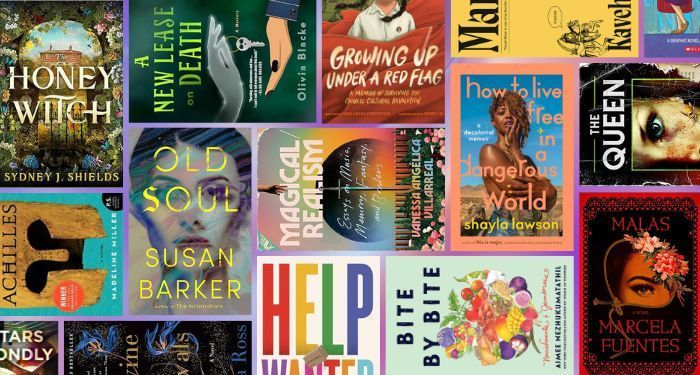
Remember wandering the aisles of Barnes and Noble to look for your next favorite book? In the digital age, Book Riot has crafted the online version of that experience.
Founded in 2011, Book Riot is the largest independent editorial book site in North America, offering podcasts, newsletters, and original content designed for diverse readers across all genres. Built for readers, by readers.
Jeff O’Neal, Book Riot’s cofounder, chatted with the Paved team about how he turned a small passion project into a publishing powerhouse.

"We’re more interested than ever in newsletters as a business."
Hi Jeff, thanks for chatting with us today. So, tell us a little bit about how Book Riot started.
Book Riot started as a glorified blog about 15 years ago. In the days before Instagram, YouTube, and TikTok, blogging was the typical book fan’s way of talking about things that they loved.
I had my own personal book blog and built a community through that. My friend and business partner, Clinton (our current CFO), started reading my site and thought, “Is there a business here? What if we got some of the people we like doing the best stuff, put them all under one umbrella, and made an aggregate site?”
Sounds like the answer was yes.
Exactly. So we raised a little bit of money from friends and family, and we gave ourselves six months. We paid what little we could for contractors and freelancers. I had two teaching jobs at the time, all while writing half the content.
But within six months, we really had something. We had good traction, and Book Riot has built steadily from there.
We think of it like the IMDB for books.
Today, we have 17 full-time staff now: sales, operations, and editorial. We have social media, have a whole flotilla of newsletters, podcast services, paid membership programs—all built from a humble blog on WordPress.
Book Riot has 30+ incredible newsletters. Why focus on newsletters?
So we started newsletters around 2016 with a solo digest of everything going on in the book world.
Since then, newsletters have been fantastic for us for a couple of reasons.
On the technology side, they give us a direct connection with readers. When Facebook changed its algorithm, we realized likes and follows weren’t really our audience—those platforms could change the rules anytime.
Newsletters weren’t very sexy when we started, but they gave us something better: a direct relationship where only the subscriber can decide to leave. As long as we send content that’s relevant, seeing 25–35% open rates is a wonderful result compared to social media reach.
From there, it’s been a journey in segmentation and specialization. Books are sufficiently broad, and newsletters help us have a direct connection with each reader. If you like young adult books, romance, science fiction, or fantasy, we want to get you into that newsletter because we want to send the right content at the right time.
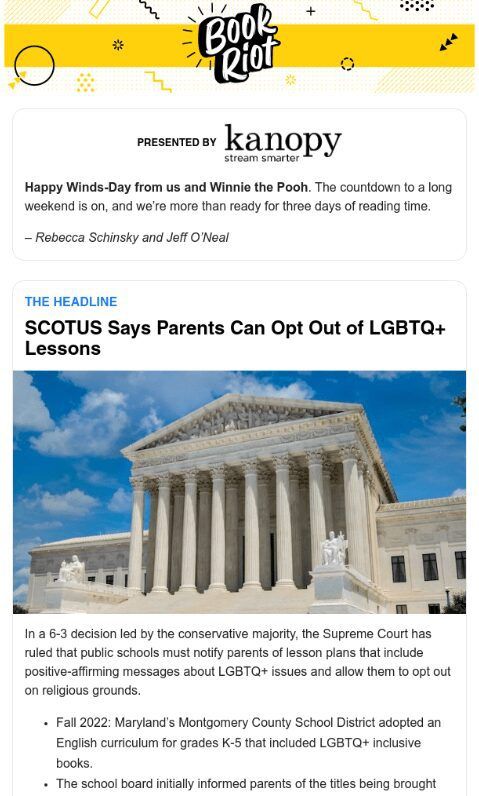
Do you incorporate ads into your newsletters?
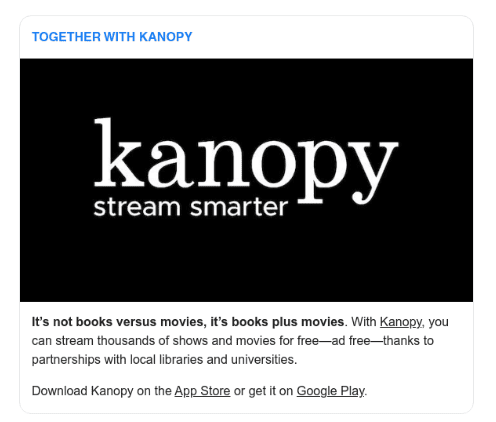
We do. They’re the vehicle for sponsors who want to get their books in front of the right readers.
But advertising is the largest line of income in our P&L, and where we invest most of our growth. Newsletters are the lightest and most stable hook: much easier for someone to sign up for than a podcast or paid subscription, but powerful enough to warm readers up and bring them deeper into the Book Riot ecosystem.
Over time, we’ve also used newsletters for lead generation: driving people to our Book Riot All Access Subscription and for affiliate deals with retailers.
How do you decide what to write about?
So our strategy has been to ask: within our space, what can we write that feels meaningful and specific to readers’ interests?
There’s a lot of books coming out all the time, so it’s very difficult for book fans to keep track of what’s coming out. There’s no central repository, like an IMDB of books.
So if you’re an avid reader and you want to know what interesting books are coming out, our newsletters are a great way to stay in the loop.
Our newsletters are segmented by interest—from historical fiction to horror. If you remember walking around Barnes and Noble and seeing all the signs for different categories, we write about all of those.
Importantly, a significant part of our readership also cares about LGBTQ+ writing and books by and about people of color, so we have separate newsletters for those. We even publish Literary Activism, which covers book banning and censorship across the US.
What does the content curation and writing process look like?
We rely on area experts to write our 30+ newsletters—staff members, freelancers, even me for some of the general interest ones.
Many of our writers already cover that niche for us on the site, so moving into newsletters was a natural fit. You can’t fake being part of the community, and that authenticity makes the content sustainable.
There are always new books to cover, but we think of newsletters as forever. Launching one is a big commitment—you need someone passionate enough to stick with it long term. It’s not easy to replace a voice once it’s established, so we don’t take launching a new newsletter lightly.
You mentioned you started writing newsletters back when they weren’t perceived as cool. Nowadays, it feels like it’s the opposite. What do you think changed?
Nothing in digital media is stable, but I’m betting on newsletter subscriptions. We own the relationship.
I’ve seen the algorithms change on social media platforms over the years, and you can get your head cut off when the networks pivot.
I think about it this way: if somebody launched a social network tomorrow and they said 99% of people use it, it’s decentralized, and you get 25-35% viewability on each piece of content, people would lose their minds! Newsletters are the most amazing social network of all.
We’re more interested than ever in newsletters as a business.
As a publisher, how have you dealt with changing algorithms and the social media landscape?
Diversification of content distribution. It’s very hard for anyone to get in the way.
With a newsletter, you can also point people to whatever the new shiny thing is—“hey, we’re over on platform X,” or “we’re doing this event.” That’s internal advertising, which is really tough on social media because the algorithm doesn’t reward calm, informational updates. It wants the sensational, viral stuff.
With a newsletter, if you’re giving people good content, they’re going to open it. And when your third module says, “we’re doing this event at this bookstore,” they’ll see it because they trust what you normally send. So there’s value in consistent, quality content. It gives you future optionality for whatever you want to do next.
In terms of traffic acquisition, where do you place newsletters?
We’ve been around for a while, so we have a considerable catalog of content on bookriot.com. And even though SEO is a declining source, it’s still a meaningful one for us. So that’s what we think of as the very top of our funnel. Somebody’s searching for books to read on their family road trip, for instance.
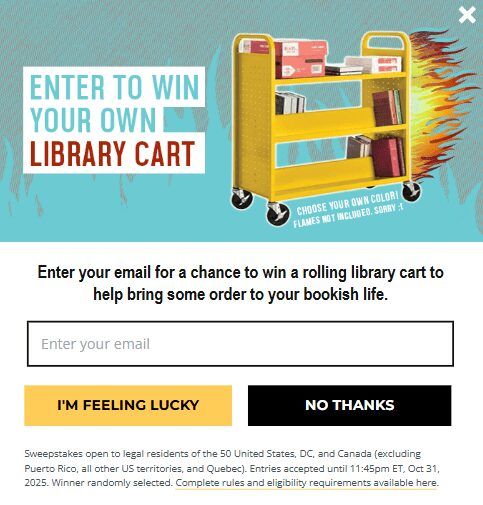
And we want to have a good solution that pops up for them after they get served through Bing or Google or Flipboard or other discovery sites. They come to the site and get a popup form with an inline link saying, “Hey, subscribe! Here’s what you’re going to get.” And that’s been our principal mode of acquisition.
What’s unique about your audience, and how do you appeal to advertisers?
We have a world-class audience of engaged, cosmopolitan readers who care about the world and want to see what’s out there. They go to movies, they watch TV, they’re engaged in the news. And as you might imagine, book readers are educated…so it’s an affluent, culturally literate audience.
Is there anything else you’d like to share with our readers?
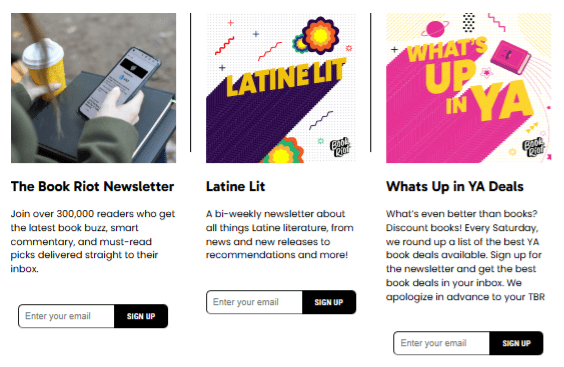
We just launched our new flagship Book Riot Newsletter. It’s designed for general interest readers. Like Morning Brew for books.
Each edition gives you a sense of what’s happening in the world of books and reading on any given day: something new to read, plus the latest news and culture around books.
Thanks, Jeff, for a delightful conversation!
We hope you'll check out the Book Riot Newsletter and take a peek at their Paved Profile.
Enjoyed this interview? Check out the other installments of our Paved Publisher Spotlight Series:
Want to be featured in an upcoming Publisher Spotlight? Send a message to hey@paved.com.