
If you’ve been paying attention to business news lately, it’s hard to miss the string of email platform acquisitions and investments over the past few years.
With over 376 billion emails sent daily across the world, investors are betting on the earning potential of bulk emails:
- •Newsletter creation and distribution platform Beehiiv raised $33 million in its Series B funding round in 2024.
- •Substack has raised $90.2 million across 5 funding rounds.
- •Vercom acquired MailerLite for $90 million in 2022, one of Europe's biggest-ever startup deals.
- •In the biggest bootstrapped acquisition ever, Mailchimp was bought by Intuit for $12 billion in 2021.
- •Spotify offered to buy ConvertKit for hundreds of millions in 2021, but they said no.
- •In 2021, Sinch acquired Mailgun and Mailjet for $1.9 billion.
- •In 2019, Twilio secured SendGrid in a $3-billion deal.
- •Marigold snapped up Emma and Sailthru in 2017 and added Campaign Monitor in 2019, which helped them triple their revenue.
There’s a lot of money in the email business. Where’s it going in 2025 and beyond, and which companies will win the race to the top?
The battle of bulk email senders
In a fierce battle for ESP market share, dozens of companies are competing to come out on top. With estimates of 250 ESPs currently in the market and new ones emerging every year, the competition is only intensifying.
| Rank | ESP | Number of Users (2024) | Number of Users (2026) | Change | Market Share (Hypothetical) | Country | Source | Comment |
|---|---|---|---|---|---|---|---|---|
| 1 | Mailchimp | 11,000,000 | 11,000,000 | 0% | 65.76% | USA | Mailchimp website | “11 million businesses use Mailchimp.” |
| 2 ↑ | MailerLite | 658,530 | 1,000,000 | +51.9% | 5.98% | USA / Lithuania | MailerLite website | “Join 1M+ creators and businesses“ |
| 3 | Constant Contact | 650,000 | 650,000 | 0% | 3.89% | USA | Constant Contact press release | “The company helps more than 650,000 customers.” |
| 4 ↑ | Kit | 56,513 (real customers) | 640,000 | +1,032.5% | 3.83% | USA | Kit website | “used by Tim Ferriss, Andrew Huberman, and more than 640,000 other creators“ |
| 5 ↑ | Brevo | 500,000 | 600,000 | +20.0% | 3.59% | France | Brevo website | “600K Customers globally” |
| 6 | GetResponse | 400,000 | 400,000 | 0% | 2.39% | Poland | GetResponse website | “400,000+ customers worldwide” |
| 7 ↑ | CleverReach | 370,000 | 400,000 | +8.1% | 2.39% | Germany | CleverReach website | “400,000 customers from over 170 countries” |
| 8 ↑ | Hubspot | 216,000 | 278,000 | +28.7% | 1.66% | USA | HubSpot Newsroom | “Today, over 278,000 customers” (Includes non email marketing customers) |
| 9 | Campaign Monitor | 250,000 | 250,000 | 0% | 1.49% | Australia | Campaign Monitor website | “250,000 companies worldwide love Campaign Monitor.” |
| 10 ↑ | rapidmail | 200,000 | 250,000 | +25.0% | 1.49% | Germany | rapidmail website | “Und zwar ein Tool, mit dem schon über 250.000 Unternehmen” |
| 11 | Keap | 205,600 | 205,600 | 0% | 1.23% | USA | Keap website | “205.6 K Users” (31.5K customers) |
| 12 ↑ | Klaviyo | 143,000 | 183,000 | +28.0% | 1.09% | USA | Klaviyo investor report | “183K+ Customers.” |
| 13 ↑ | ActiveCampaign | 150,000 | 180,000 | +20.0% | 1.08% | USA | ActiveCampaign website | “See how 180k+ customers are growing” |
| 14 ↑ | Omnisend | 100,000 | 150,000 | +50.0% | 0.90% | Lithuania | Omnisend website | “150,000+ Online stores use Omnisend to grow their businesses” |
| 15 | Sender | – | 180,000 | N/A | 1.6% | Lithuania | Sender website | "Over 180,000 companies use Sender" |
| 16 ↑ | Email Octopus | 83,000 | 100,000 | +20.5% | 0.60% | UK | Email Octopus website | “we’ve now helped over 100,000 users feel like instant marketing pros” |
| 17 (new) | Moosend | – | 100,000 | N/A | 0.60% | Greece/UK | Moosend home page | “Join 100,000+ empowered customers“ |
| 18 ↓ | Benchmark | 500,000 | 100,000 | -80.0% | 0.60% | USA | Benchmark Email website | “More than 100,000 marketers worldwide rely on Benchmark Email” |
| 19 | AWeber | 100,000 | 100,000 | 0% | 0.60% | USA | AWeber website | “AWeber is an email marketing service provider helping over 100,000 customers.” |
| 20 | Campaigner | 100,000 | 100,000 | 0% | 0.60% | USA | Campaigner website | “over 100,000 businesses“ |
| 21 | Mailjet | 40,000 | 40,000 | 0% | 0.24% | France | Mailjet website | “With over 40,000 customers in 150 countries” |
Source: Email Tool Tester's estimates of ESP market share.
Established players like Salesforce Pardot and Braze focus on e-commerce and sales emails. Newer entrants, such as Beehiiv and Substack, are targeting the growing market for creator-driven newsletters. Meanwhile, versatile platforms like Mailchimp and ConvertKit cater to both marketing and newsletter needs. On the backend, SendGrid and Amazon Simple Email Service specialize in the infrastructure that powers bulk emails.
Team 1: the classic ESPs
Email service providers (ESPs) help businesses send bulk emails, from marketing updates to newsletters, building brand credibility and boosting sales.
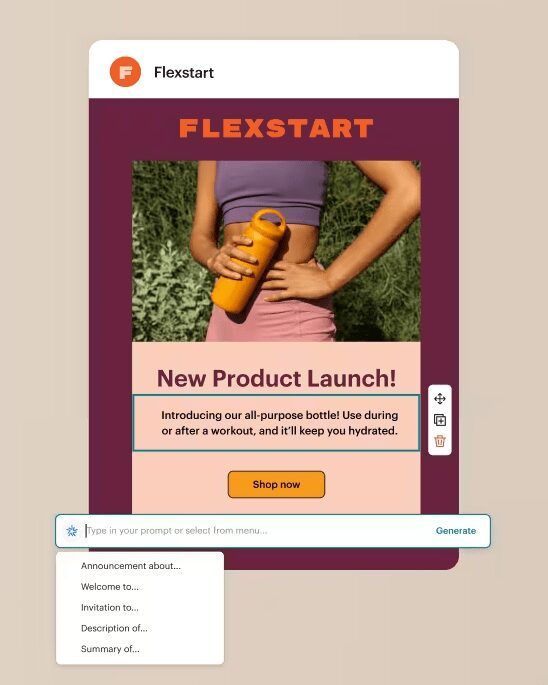
According to EmailToolTester, Mailchimp leads the pack, commanding an estimated 70% of the ESP market share. Mailerlite, Constant Contact, Brevo, and Benchmark, and Sender follow in the top 10.
Mailchimp sends around 1 billion emails daily, making it an undisputed leader in email marketing. Competitors like Klaviyo, ConvertKit, Campaign Monitor, and AWeber also excel, supporting millions of businesses with their email marketing needs.
When it comes to the classic ESPs, their established presence and substantial market share make them formidable players in the industry.
Team 2: the newsletter underdogs
More recently, new startups have emerged, focusing specifically on email newsletters. These platforms help writers create, grow, and monetize their content.
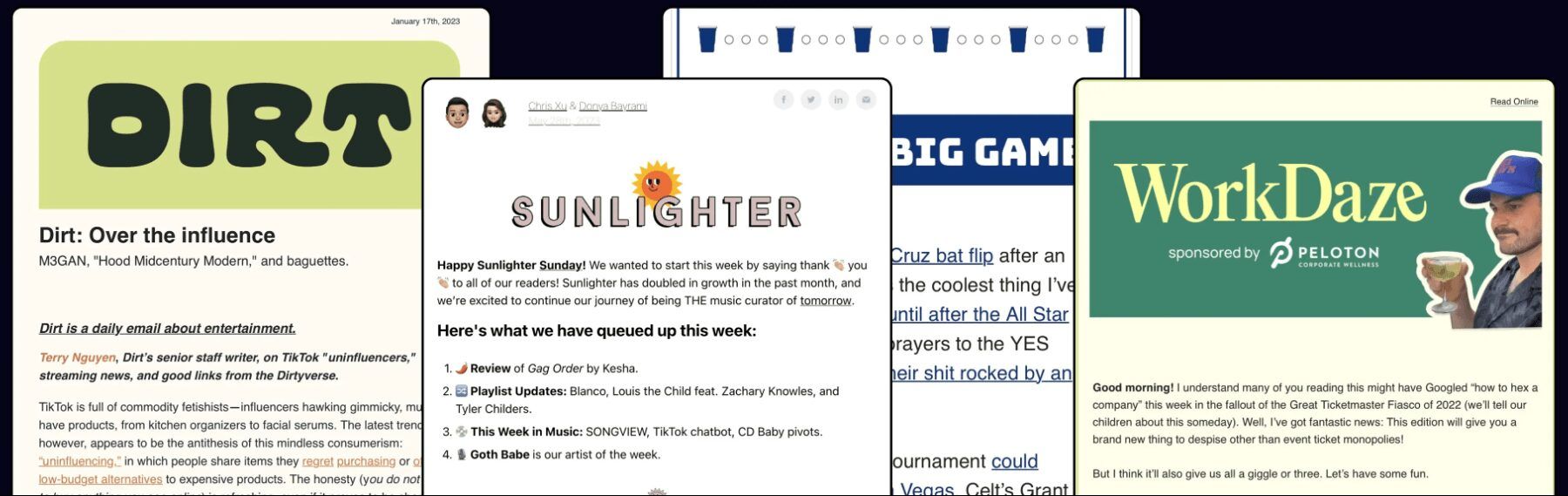
Companies like Beehiiv and Substack help writers set pen to virtual paper and get newsletters out quickly and easily.
- •Beehiiv:
Beehiiv is a rapidly growing platform designed for creators. It simplifies writing, sending, and monetizing newsletters. Users love its intuitive interface and growth-oriented features, which help expand audiences and generate revenue. - •Substack:
Substack, an email newsletter and content creation platform, exploded in popularity in 2020 and has been a key player ever since. Once dubbed the “next social media,” Substack boasts over 35 million active subscriptions, attracting some of the world’s most acclaimed writers and creators.
Beehiiv and Substack stand out by focusing on creators, with easy-to-use interfaces and direct monetization options. At the same time, classic ESPs are geared towards broader marketing needs with lots of tools and e-commerce features. This makes Beehiiv and Substack perfect for indie, content-driven newsletters, rather than business marketing and sales.
Team 3: bulk email API platforms
Behind the scenes, some companies specialize in the technical side of email, offering robust APIs for transactional emails, marketing emails, and newsletters.
- •SendGrid:
SendGrid, which handles emails for Beehiiv and ConvertKit, sends an impressive 148 billion emails per month, on average. In comparison, the largest ESP, Mailchimp, claims to send 1 billion emails per day, which is a fraction of SendGrid's volume. - •Mailgun: Used by Substack and Ghost, Mailgun has seen the online publishing industry quadruple its sending volume over the past two years, highlighting its robust capabilities.
- •Mailchimp Transactional Email: Mailchimp’s transactional email service handles millions of emails daily, ensuring critical communications like order confirmations and password resets are delivered promptly.
- •Amazon SES: Amazon Simple Email Service (SES) sends over 2 billion emails per year. It’s a cost-effective solution that integrates seamlessly with other AWS services, making it popular among businesses already using Amazon’s cloud infrastructure.
As the backbone of email, these platforms are perfect for anyone who needs to send bulk emails quickly and reliably while keeping full control over the email setup.
Has the newsletter bubble burst?
While the technology behind email newsletters has remained largely unchanged for decades, the market for email tools has shifted dramatically.
Former underdogs like Mailchimp have risen to become industry giants, overtaking former winners like Constant Contact. New players like Substack and Beehiiv are entering the scene, eager to make their mark.
However, the future of email remains unpredictable, with potential ups and downs ahead.
Big tech's attempts to break into the newsletter space have met with setbacks. Meta, the parent company of Facebook, shut down its newsletter product, Bulletin, and Elon Musk retired Revue, the newsletter platform integrated into X.
After the newsletter boom during the pandemic, there are signs that excitement is waning. The New York Times suggests we may have reached the end of "peak newsletter," posing challenges for newer companies.
Despite the big investments and online hype, Substack and Beehiiv may face some bumps in the road. Both companies reported negative net income to the SEC for the 2023 fiscal year:
Email Startup
Net Income in 2023
Data Source

-$3,701,172.00

-$22,876,537.00
But in the age of Amazon, which took years to turn a profit, does it really matter?
Just like Amazon, some companies may prioritize growth over immediate profitability. Only time will tell if this strategy pays off for new players in the email industry.
Who wins the battle for the inbox?
"In a gold rush of email platforms, the transactional email providers are the ones selling the shovels."
As competition heats up in the email industry, expect plenty of shake-ups with wins, losses, and new players challenging the established giants.
Intuit Mailchimp is still the market leader, but recent layoffs, price hikes, and the closure of TinyLetter could indicate possible shifts ahead.
In such a fragmented market, the real winners might be the transactional email companies. While traditional ESPs and newsletter platforms duke it out, behind-the-scenes players like SendGrid and Mailgun quietly power email infrastructure on the web, even supporting the ESPs themselves.
These unsung heroes prove that in the world of email, stability behind the scenes is key to long-term success. In a gold rush of email platforms, the transactional email providers are the ones selling the shovels.
Takeaways for bulk email senders
Major acquisitions and market shifts can lead to changes in the email products we rely on every day. Here’s what you need to watch out for in your email providers’ offerings, support, and pricing:
- •Keep Your Eyes Open:
The email platform market is always evolving. With so many ESPs available, it's wise to regularly evaluate if your current provider still fits your needs. While big names like Mailchimp dominate, more affordable options like MailerLite or Sender might be a better fit for you. - •Stay Flexible:
Companies like Intuit Mailchimp have faced price hikes and layoffs recently, which could mean shifts in service. Be ready to switch to a new ESP if yours no longer works for you. A platform with a free-forever plan like Sender lets you trial the move before you commit. - •Watch the Trends:
The newsletter boom may be cooling off. Even big players like Meta and X have pulled back their newsletter efforts. Keep an eye on the industry to stay ahead of any changes. - •Focus on Reliability:
While ESPs battle for market share, the real winners are the transactional email providers keeping everything running smoothly. They’re the ones ensuring your emails get delivered without a hitch.